Shots In The Dark
How We Choose Our Presidents
The Washington Post reports that voters care more about whether a candidate smokes than his or her race....
Barack, time to quit.
I wonder why, though. Do they think the president will get cancer in office? Do they feel that smoking is retro? That it's a sign of weakness? That it's suggestive of smoky back-room politics?
Or is it just—my theory—that we have so many negative connotations about smoking, we impose them on people who smoke?
Which, in my opinion, is not entirely unfair. I do look at Obama's inability to quit and see it as a sign of weakness.
Oh, and bad news for Mitt Romney: 3 in 10 voters say they'd be less likely to vote for a Mormon....
More on the New Republic
A relative points out the greatest example of The New Republic's editorial failure in recent memory: Its dogged support of Joe Lieberman against Ned Lamont in the 2006 Connecticut Senate election.
As expected, Lieberman is acting like a spoiled, petulant brat in the Senate, continually threatening to take his ball and go home. He is an embarrassment to my home state and to his once credible reputation.
The New Republic's failure to realize that Lieberman is a politician whose time has gone typifies the kind of editorial idiocy that has led the magazine to cut its frequency of publication in half. They wonder why their circulation is slipping....
Is Harvard Following Yale's Lead?
The Yale Daily News suggests that, if Harvard is lucky, Drew Faust may be a president in the mode of Yale's Rick Levin—just as Larry Summers was a president in the mode of the disastrous, where-is-he-now? Benno Schmidt.
Following the turmoil under Schmidt and Summers, both of whom were appointed from outside their respective universities, search committees at both schools picked insider candidates who displayed leadership styles markedly different from their predecessors. Whereas Schmidt and Summers engendered ire among their faculties, Levin and Faust are, by all accounts, widely respected at their institutions.....
Yale has enjoyed a period of stability, prosperity and growth under Levin; Harvard would welcome the same. But would it be satisfied with the same?
Boycotting Summers?
So, as part of the rehabilitation of Larry Summers, Tufts president Lawrence Bacow invited the hedge fund employee and former Harvard president to give a talk. Innocent enough, right? Well, now some Tufts professors are calling for a boycott of Summers' lecture.
According to InsideHigherEd....
Having Larry Summers here is like a slap in the face,” said Gary Goldstein, a professor in the physics and astronomy department. “I see him being invited here as a lack of awareness about how that affects our campus environment.
How exactly does it affect your "campus environment," Professor Goldstein?
(In fairness to the professor, I should at least mention his argument: It's a high-profile lecture series which he feels has been weighted toward conservative speakers—apparently Summers falls into that category—at the expense of "progressive" speakers.)
I, um, haven't always been supportive of Summers. But the man has hardly done anything boycott-worthy. All this does is confirm Summers' arguments about the mediocrity of the professoriat.
(Although at least Goldstein is a scientist; if he were a humanist, all of Summers' stereotypes would be fulfilled.)
Goldstein goes on to say, "Having Larry Summers here is like a slap in the face." Professor Goldstein is clearly a sensitive man.
On another note, Summers' talk is entitled "Rethinking Undergraduate Education." Is this more evidence that Summers is working on a book about universities?
Faust Cleans House
Drew Faust is wasting no time; as the Crimson reports, Harvard v-p for Alumni Relations and Development Donnella M. Rapier has announced her resignation. As even Rapier seems to admit, Drew Faust fired her.
This move has been expected since about five minutes after Faust was named. As one person told me at the time, "They're going to get rid of Donella because she's a Larry person and because she couldn't get a campaign off the ground." Some felt that she wasn't qualified for the job, that she was "in way over her head."
Who will Faust install in Rapier's place? Put your money on longtime aide Tamara Rogers, who went to Harvard-Radcliffe, has worked at Harvard for ages, has a good reputation and is well-liked both within and outside the university.
Who's next on the chopping block? It would be grossly unfair to speculate....
The New Republic Splits in Half
I was saddened by the news that the New Republic, where I began my career in political journalism, has lost so much circulation that it is moving from a weekly to a biweekly.
I am also saddened by the magazine's peremptory announcement that we subscribers will now simply be receiving half as many issues as we paid for, and too bad about that.
And, finally, I am amused by editor Franklin Foer's remark that the magazine now hopes to publish articles that will "transcend ideology."
This sounds very much like what my old boss, John Kennedy, said when he described the new magazine he was creating, George, as "post-partisan."
Transcend ideology...post-partisan...yup, pretty much the same thing.
But what magazine ripped John a new one for coining that term? You guessed it: The New Republic. First, literary editor Leon Wieseltier trashed the magazine in a column he essentially co-wrote with his old friend, Maureen Dowd. "The message of George is...don't take politics seriously." Etc., etc.
Then TNR published an absolutely vicious piece accusing John of squandering his family's dignity. (News to William Kennedy Smith, I'm sure.)
What wonderful irony! Twelve years after George was founded, TNR admits that John was right. (I'm not holding my breath waiting for an apology.)
And the irony goes even deeper...because at the moment, those political magazines which have the passion to take on the Bush administration are actually doing well. This might actually be a moment when a little ideology would be a good thing.
The reason TNR has been slumping for years is not that it isn't viable. It's because it's been badly edited....
Stanford's Buckraking President
On Saturday, the Wall Street Journal published a shocking and terrifically good piece about Stanford president John Hennessy. (Online, but available to subscribers only; the Stanford Daily writes about it, not very well, here.)
Illustrated by artwork showing Hennessy holding a thick wad of cash, the article begins by noting that last November Hennessy earned more than $1 million, none of which came from his presidential salary. The money included a $75,000 retainer from Cisco and revenues from sales of stock in Cisco, Atheros Communications and Google, where he sits on the board.
That month makes up only one part of an income stream that many in academia consdier without precedent for a university president. In the past five years, through exclusive investments and relationships with companies, Mr. Hennessy has collected fees, stock and paper stock-option profits totalling $43 million...That dwarfs his $616,000 annual compensation at Stanford.....Mr. Hennessy's outside business interests crisscross his life at Stanford. Stanford and Google have a number of business relationships, giving Mr Hennessy a seat on both sides of the table. He has invested in venture-capital firms generally inaccessible to the public, many of which invest the university's money. Mr. Hennessy has introduced some of these firms to promising Stanford entepreneurs. He has also put his own money into Stanford-based projects.
The article then goes on to detail conflicts of interest that would make an Enron executive blush. It is astonishing that Stanford's board of trustees permits this—but because Hennessy is a gifted fundraiser, it does.
This is a fascinating and important story; you can't help but think that it's only a matter of time till one of Hennessy's investments blows up in Stanford's face.
And the article realizes something very important: As universities get richer and richer, and those who work at them fall prey to the greed that courses through today's money culture, the way that universities are reported on needs to change. Universities must be considered subjects for business, political and investigative reporting. At the moment, universities exist in a gray area where they exploit private sector opportunities while claiming to be non-profits that should be reported on only for that aspect of their work. Meanwhile, the money pours in, and university officials reach out their arms—and open their pockets—to catch it....
Here's a suggestion for Derek Bok: President Bok, you've written eloquently on ethical issues regarding universities and the private sector, but your writings have been reluctant to mention specifics and spark controversy.
You could do an enormous service here by writing about the increasing profiteering of university presidencies—it's astonishing to read how many university presidents earn lucrative outside incomes by sitting on corporate boards which have business before their universities—and naming names.
Faust the Aristocrat
In the Globe yesterday, the M-Bomb and Maria Sacchetti wrote this long and interesting profile of Drew Faust. The dominant theme is that Faust was composed and mature from an early age—the letter-writing to Eisenhower was hardly an isolated example.
The part of the piece I most enjoyed delved into Faust's childhood. Knowing that Faust went to prep school, I knew that hers couldn't have been such a hardscrabble existence. Turns out that Faust grew up with extraordinary privilege.
Catharine Drew Gilpin was born on Sept. 18, 1947 , in New York City to the former Catharine Mellick , a New Jersey socialite, and McGhee Tyson Gilpin , a Princeton graduate from Virginia who became a thoroughbred horse breeder. Her parents, who met on a fox hunt, lived near New York before she was born.
[Blogger: Her parents met on a fox hunt? Fabulous. You can't make this stuff up.]
The family later moved near Millwood, in Clarke County, Va. Known as "Drewdie," she was raised mainly at Lakeville Farm , a white farmhouse on hundreds of acres with a view of the Blue Ridge Mountains. At Scaleby , their grandmother's estate nearby, she and her three brothers swam in the pools and read by the fire in the Georgian mansion, with crystal chandeliers and a ballroom on the top floor.
[Blogger: The pools, plural?]
"The Gilpins are to Clarke County what the Kennedys are to Hyannisport," said Paul Jones , a retired school principal who once worked with Faust's uncle. "You would go by Scaleby and look at how the other half lived."
Great stuff.
Here's a question: Would a young woman from that background today go in Faust's direction, living a life of hard work, leadership, and accomplishment? Or, as part of America's money culture, would she follow the Paris Hilton model?
(Hint: This is not so much a question about feminism as it is one about American cultural decline.)
A Minor Correction
In the Crimson, Samuel Jacobs writes:
But after working at John F. Kennedy Jr.’s George magazine and writing a book about the magazine’s late founder—its publication complicated by lawsuits and allegations that Bradley was profiting off Kennedy’s death—the New York writer found himself drawn to Harvard and following its players.
All true, except that there weren't any lawsuits involved.
Threats of lawsuits, sure. But on one actually followed through...because they would have lost. There was really nothing to sue about.
Perhaps the Crimson was thinking of this $12.5 million libel suit that was filed against me?
I Blush Crimson Red
Today's Crimson has a story about this little ol' blog.
Since breaking ground two winters ago, Shots in the Dark has become a motley circus, filled with its own distinct set of acts and performers with Bradley serving as ringmaster. The blog, at richardbradley.net, provides those sitting at their desks anywhere from Mather House to Manhattan with a view of machinations in Mass. Hall and an ear to whispering throughout the Yard.
Some of the descriptions of SITD include: "catty," "chatty," less than influential, irresponsible (that was me), "democratic" (love that one!), and "prescient."
I would add "often wrong."
The sage Robert Putnam says, "I think that the best part of his blog is the commentary from other readers." I agree. While I enjoy writing a post that seems useful, what I really enjoy is reading your comments. That's where I feel that I'm learning something, and where I feel that in a small (irresponsible, etc.) way, I have sparked some conversation. Even on those occasions where you folks make mincemeat of what I write—I've usually deserved it—you are a great community of contributors, and I thank you for it.
So welcome, new Shots in the Dark readers. And thanks to all of you who have visited over the months. I couldn't do it without you.
Monday Morning Zen
 Bucky Dent's Baseball School, Delray, Florida
Red Ink
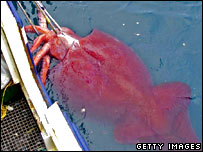
Fisherman in New Zealand have caught what is believed to be the largest squid ever landed intact—about 33 feet long and weighing 990 pounds.
The fishermen were fishing for Patagonian toothfish—which is served in American restaurants as "Chilean sea bass"—when they hooked the giant squid, which was also fishing for Patagonian toothfish at the time. (By the way, the Brits call these "colossal squids," which is sort of sweet.)
According to one expert, calamari rings made from the squid would be the size of tractor tires.
Good thing I've never liked calamari....
The Money Culture/Quote of the Day
(A twofer!)
It makes sense. This is such beautiful land, and Bedminster is one of the richest places in the country.
—Donal Trump, on why he's building a mausoleum for himself in Bedminster, New Jersey
The Gender Double Standard?
Here's more evidence that making broad generalizations about gender is considered wrong when men do so negatively about women...but right when women generalize positively about themselves.
On the Center for Global Development website, Kennedy School student Molly Kinder writes about women's gender-specific leadership style.
...
the ascent of so many talented women to presidential posts reflects an emerging openness to women (and minorities) that should rightly be heralded as a watershed shift in societal attitudes. But perhaps more importantly, that Ellen Johnson Sirleaf and Drew Gilpin Faust were chosen to lead war ravaged Liberia and unwieldy Harvard University reveals a far more salient reality: that women make damn good leaders and, importantly, different leaders. [Blogger: emphasis mine.] The fundamental contrast between Ellen Johnson Sirleaf and Samuel Doe and Charles Taylor, and the contrast in style between Drew Gilpin Faust and Larry Summers -- these are both evidence enough of this fact. Consensus building, accomplished, competent, pioneering and principled. (And, notably, all are mothers). Now that's a style of leadership that the developing world -- and my own country -- would do well from.
Huh.
Two quick things about this post: I love the fact that Kinder has already established that Drew Faust is a "damn good leader" two weeks after she's named president. Also, that she can write about the presidencies of "war-ravaged Liberia" and "unwieldy Harvard" in the same sentence.
More to the point, a simple contrast between one leader, who happens to be a man, and another leader who happens to be female proves...absolutely nothing, except that the two leaders are different. It certainly doesn't establish that leadership style and gender are linked, despite Kinder's argument that the simple contrast between a man and a woman is "evidence of this fact."
I am also intrigued by the introduction of motherhood as a contributing factor in leadership style. Maybe it's true, I don't know. (Does that make the FAS a bunch of big babies?) But I'm not sure that Kinder has fully considered the implications of her idea.
After all, if motherhood shapes leadership style, what about fatherhood? Larry Summers, from everything I ever heard, was a really good dad to his three kids. Shouldn't Kinder give Summers some leadership points as a result? Or is motherhood positive, and fatherhood negative? And what are the specific qualities that stem from motherhood, and what are the specific qualities that flow from fatherhood?
And if women are better leaders because they are mothers, does this mean that women who choose not to have children are somehow lacking, and must compensate for not being moms?
This is very tricky ground.
I am fascinated by the way Drew Faust's appointment has prompted the emergence of this sexual double standard. Attributing universal attributes to a gender is highly problematic whether it has to do with leadership style or innate aptitude for science. I'm not saying either is wrong, but you have to be consistent. You can't say one declaration is perfectly appropriate and the other is inherently offensive.
I'll bet Molly Kinder dinner at the restaurant of her choice that she was outraged when Larry Summers made his remarks about women in science....
At Radcliffe, "Jubilation"
Radcliffe Institute fellow Christine Stansell has an interesting post over at Open University. (And you thought that was an oxymoron.)
Jubilation reigned at the Radcliffe Institute of Advanced Study in Cambridge last week, where I'm a fellow this year. The new president of Harvard is an admired and appealing figure, beloved by her staff and garnering immense affection even from the visiting scholars who've only known her for six months. About three-quarters of the fellows are women, and fully aware of the ardor of what Drew Faust just accomplished. To jump through one hoop after another, ever higher, for six months!Stansell goes on to argue that, in academia, having children significantly decreases women's chances for tenure but actually
increases men's.
Statistically, each child of a man makes him more likely to get tenure. The brilliant young mother appears stressed out and underproductive. The brilliant young father, no longer the obnoxious young nerd he might have seemed when he was hired, now seems all the more human and charming for his (discrete) family responsibilities.
Huh.
My problem with that paragraph is that it posits statistical evidence, then introduces an anecdotal and highly subjective ("obnoxious young nerd") and absolutely unquantifiable generalization. If Larry Summers had made this kind of remark, what would the reaction be? Or are such arguments only offensive when they come from white men in positions of power?
Drew Faust's Drapes
Sometimes the Boston Globe verges on self-parody.
Consider, for example, this editorial about Deval Patrick's costly office redecoration. It begins:
QUESTION: When Drew Gilpin Faust moves into Elmwood, the historic, three-story home of Harvard presidents, will anyone howl if she replaces the drapes? Why then has there been such a hullabaloo over Deval Patrick's redecoration of his office in another late 18th - century architectural treasure -- the Massachusetts State House?
Some of the answers are obvious: Harvard is private; the government of Massachusetts is public....
If the public/private distinction here is so obvious—which it is—why does the writer even bring Drew Faust into the question?
The Globe seems to be implying that people are mad because it's a man who's redecorating his office, while everyone would expect a woman to do the same. How politically correct of the paper—and how silly.
No, people are mad because one of the new governor's opening moves is to blow a bunch of money on new furniture, a new Caddy, and an expensive chief of staff for his wife.
In a time of concerns about budget deficits at Harvard, if Drew Faust spent a bunch of money refurbishing the presidential mansion and got herself a new Cadillac, that wouldn't go over so well either.....
Quote for the Day
"If Bob Dylan's done [an iTunes ad], I'm up for it."
—Jon Fratelli of the Fratellis on selling out (Rolling Stone, 3/8/07)
Friday Pick of the Week
Today, with a magazine deadline looming—and a book manuscript due in two months—I am, naturally, thinking of vacation. This is partly because I've already planned one; I'll be diving in late May. And while I'm on my favorite Mexican island, I may take a day trip to swim in a cenote (pronounced see—
no—tay) along the Yucatan peninsula, as described in today's Times "Escapes" section.
Have you ever been to one of these inland caverns? They are not easily described, but essentially they're massive cave systems filled with fresh water. They dot the Yucatan, sometimes appearing like enormous sinkholes, sometimes looking like little more than a very small pond, no bigger than a backyard pool—which can travel underground for uncharted miles. Some of the cenotes are set up for tourists, with stairs and lighting. Others you can find at the end of an apparently abandoned dirt road, with a rocky path to the cenote and a man waiting to take your pesos.
Using flashlights and rope, you can dive them, though I haven't. Snorkeling in a cenote is already an intense experience. The water is crisp, cool, and remarkably clear. There are some small fish, but there's not really much life in them; they are stark. The underwater rock formations are dramatic and otherworldly. You can swim from chamber to chamber, especially if you're willing to hold your breath and swim under a rock ceiling for 30 or 40 feet until you reach a room where there is again room to lift your head above water. This is really not far, of course, a child can do it, but when you're swimming and there's only rock overhead—no light, no sky, no air—your rational mind can desert you.
(I'm not great about these things; when I'm underwater, I like to be able to see light overhead. Once, in Belize, I went canoeing with friends in an underground cave, and at times the cave ceiling was so low that we could not paddle, but had to lie down in the canoe and use our hands to grab the rock and pull the canoe along. Not for the claustrophobic.)
At Gran Cenote near Tulum, my friends and I climbed to the top of a rock wall and jumped about 30 feet or so into the water. (You kind of have to pick your spot.) Unlike in the United States, in Mexico you can do these things without having to sign eight pages of legalese. It's a risk, sure (though not really a very big one). But the kind of risk that makes you feel deeply alive.
Swimming in a cenote is humbling and spiritual—a Baptist preacher would understand. It's another aspect of our wonderful neighbor to the south that many U.S. citizens don't appreciate. Mexico is a hard and beautiful place, the beauty often in correlation to the toughness. Cenotes fill you with feelings of humility and awe at the power of nature, and maybe a little more respect for the people who inhabit this amazing country.
El Gran Cenote, Tulum.
At Princeton, It's All About Race, Class, and Connections
For all the good things that can be said about a Princeton education, sometimes, aren't you just really glad that you didn't go there?
In Which I Solve the Tom Brady Dilemma
The Patriots quarterback is taking a lot of grief for the delicate dilemma in which he finds himself: dating the world's most famous supermodel even as his longtime ex announces that she is pregnant with his baby.
Bridget Moynihan: In trouble. Giselle Bunchen: Trouble.Tom Brady is 29. Bridget Moynihan is 36. I think the phrase 'old enough to know better' fits here,'
writes one sports columnist.
...I'm profoundly disappointed in Our Tom.
Oh, please—like you wouldn't be playing the field, in his position, no puns intended.
Meanwhile, various sexist scribes are suggesting that Bridget Moynihan, worried about her age, has "trapped" Brady.
I'll probably regret saying this—in fact, I just about already do—but can't we all just be a little more French about such matters? Enough with all the prudishness, chauvinism ,and moralizing. Everyone needs to relax a little. It's not like Tom and Bridget had a one-night stand and this happened. They were together for four years.
So far as we know, Tom Brady is still a good guy and Bridget Moynihan is a lovely woman and a relatively okay actress who's going to have a baby. Life is a little messy sometimes. Let's be happy for her and wish them all the best.
Meanwhile, in New Haven
Yale president Rick Levin announces his plan to make Yale the country's greenest university, lands in Newsweek.
What will Drew Faust do?
Oh, and by the way, Governor Patrick—Yale is replacing its cars with hybrids.
Deval Patrick, Idiot
New Massachusetts governor Deval Patrick is in hot water for spending state money on swank redecorations for his office and ditching Mitt Romney's Lincoln Town Car in favor of a Cadillac DTS.
I swear, sometimes I think I should go into politics. Because, guys, this stuff is not that hard.
Okay, Governor, maybe your office is a little ratty. You really want to redecorate? Bring in some "Living" reporter from the Globe, tell him/her how the office doesn't do the great state of Massachusetts justice, and announce that you've found a donor, preferably someone with a longtime interest in historic preservation, to pay for it, because you don't want to spend taxpayer dollars.
Next...a Cadillac? Oh, Deval, you are a bonehead. What kind of message does that send, driving around in a posh new Caddy? This kind of message:
One word, Governor Patrick:
Hybrid. How about the Ford Escape? It's American, it's populist, and it gets about six times the gas mileage of the Cadillac. It's still an SUV, which is unfortunate, but people will forgive you that.
Oh, and Governor—your wife doesn't need a $72,000 aide. She just doesn't. (Ever heard the name Alan Hevesi? You could look it up.) Tell her to get over herself. Hire a scholarship student graduating from a local university—not Harvard—maybe the daughter of a veteran—and pay her $30 grand. She'll be happy to get the job, and you'll look like you're helping out a hard-working, up-and-coming young person. Which, in fact, you will be.
Residents of Massachusetts, you have a problem, because if this behavior is indicative of Patrick's character—and trust me, it always is—in about three years, you're going to have some serious corruption scandals on your hands.
A First Move for Faust
The Crimson reports that Drew Faust has asked Steve Hyman to stay on as provost.
Interesting.
What does this mean? Here are some possibilities.
1) Sometimes a rose is just a rose: Faust, like others around campus, thinks that Hyman is doing a good job and sees no reason to cast him off just because he wanted to be president
2) Faust knows that she needs to build support with the scientists and thinks this is a good way to start doing so
3) The Corporation wanted Faust to keep Hyman, and since she has been angling for the job for years, she played along
4) Drew Faust is a very secure woman, strong enough to retain a former rival
5) Drew Faust is a placeholder president, which is what the Corporation wanted
Take it from here, folks.
A Letter to the Crimson
Dear Crimson folks,
One of my least favorite words in the English language is "
asshole." Why? Because even though it's fairly common, it's unpleasantly graphic. Maybe I'm Waspy that way, but maybe I'm emo and just very sensitive to words, too. There are some swear words I'm pretty okay with. "Fuck" has a nice ring to it. "Shit" and "bullshit" are good too. But "asshole" bothers me. So sue me, Dr. Freud.
Then again, I'm okay with "motherfucker," which is icky, it's true, but in a funny, over-the-top way. No one really means it when they call you a motherfucker, unless possibly you go to Brown, so everyone can have a good laugh. But "asshole" always has a nasty, vicious undertone. A Nixonian quality, really.
Moreover, when we say "motherfucker" in polite conversation—"Gosh, my co-worker is a motherfucker"—eyebrows are raised. Shouldn't the same be true for the word "asshole." Our society is vulgar enough as it is. Must we debase it further?
The point is, do I really need to open up your website and see a huge ad for some hack book by "Robert I. Sutton, Ph.D." called "
THE NO ASSHOLE RULE."
Here's a tip,
Dr. Sutton. Putting "Ph.D." after your name doesn't make you look smart and authoritative. It makes you look needy and pathetic and, frankly, probably dumb. Even though you are allegedly a professor at Stanford. It also makes it look like you're paying Alibris to publish your book, even though you're not.
I'm sorry; I don't mean to be a jerk about this. Please, don't call me an—well, you know. It's just that I'm having my morning coffee here. Who needs "ASSHOLE" in their face at this hour?
Crimson, you guys don't need the ad money that much. (Do you?) Strike a blow for clean living. Purge the ass**** from your page. We'll all feel better.
Quote of the Day
"I don't think anybody believes that in the last six years, all of a sudden Bill Clinton has become a different person."
—David Geffen, who, apparently, is without sin
"I want to run a very positive campaign, and I sure don't want Democrats or supporters of Democrats to be engaging in the politics of personal destruction."
—Hillary Clinton, in response
This and That
Duke political scientist Brendan Nyhan defends Larry Summers on his blog, pointing out the various ways in which Summers statements about women in science have been translated into the popular press. See for yourself...and while you're at it, Harvard folks, you might take notice of something else: A professor who actually writes a blog!
(All right, I take it back, he's a graduate student. But still.)
Meanwhile, a commenter below wondered what was up with Rick Levin's decision not to abandon early admissions at Yale. Here's his explanation...and here's my excerpt of what seems to me the most candid part:
Y: But by keeping early admissions, you keep a system in which the early pool, which is wealthier, has a higher acceptance rate -- approximately 18 percent last year versus 8 percent for the regular pool.
L: The quality of the early pool is higher on average. Many of the best high schools encourage their best students to apply early.
Y: In 2002, you told the alumni magazine you would like to see early admissions eliminated everywhere.
L: I emphasized that every school would have to eliminate early admissions to achieve the desired result. But this is very unlikely to happen. If Yale were to eliminate early admissions now, it is most likely that we would end up with a system where the top three or five schools had no early program, and just about everybody else did. That wouldn't solve many problems and would create some new ones.
By the way, good for the Yale Alumni Magazine to ask Levin some tough questions. While people pay a lot of attention to Harvard Magazine—which is very fine, it's true—the YAM has actually gotten really good, and is in some ways (design, for example) better than Harvard Magazine.
Bryn Mawr Remakes Harvard
In what is either shameless and pathetic self-promotion or a candid recognition of its relative place in the world, Bryn Mawr college has posted a webpage devoted to its graduates (e.g., Drew Faust. '68) who have gone on to prominent jobs at Harvard.
Anna Lo Davol '64....was a physician at Harvard's University Health Services.
To be fair, there are some interesting women on the list. (I'd forgotten that Hanna Gray went to Brywn Mawr, and Mary Maples Dunn, and Rosabeth Moss Kanter, and Sally Zeckhauser.)
But still...a whole page devoted to the fact that your alumnae did well at Harvard? Isn't that sort of like the Tampa Bay Devil Rays putting out a press release devoted to guys they traded to the Yankees?
Jeter & A-Rod: The Drama Continues
A couple days ago, Alex Rodriguez said that he doesn't spend five nights a week at Derek Jeter's house any more, but they're still friends. Today, Jeter responds by saying that yes, they get along fine, and the media makes too much of their relationship.
I'm going to defend the media—and A-Rod—here.
There clearly is an interesting dynamic between these two guys. They're both extremely well-paid, remarkably talented players, with very different personalities. A-Rod seems introspective and sometimes insecure; Jeter loves to play ball and chase girls, and if he thinks about much else, he gives little sign of it. (In my opinion, he should have stuck with Yalie
Jordana Brewster, granddaughter of Kingman Brewster and daughter of a Brazilian model. How's that for bloodlines? Though come to think of it, she might have been too smart for him....)
A few years ago, A-Rod slagged Jeter in an Esquire article, saying that because he'd always been on such good teams, he'd never really had to be a leader. (While that may have been true at the time, Jeter has certainly proved it wrong in the past few years.) Jeter is the hometown here who can do no wrong in the fans' eyes; A-Rod is the import whom the fans cheer only as long as he doesn't screw up.
Jeter is a great player, of course. His love for the game and the passion with which he plays it are inspiring. But I think A-Rod deserves our appreciation as well. He's obviously struggling with some issues—last season was a psychological nightmare for him—and he talks about them out loud. I like his honesty. Baseball, and the Yankees, are more interesting for it. And when A-Rod is playing the way that he can, he really is a joy to watch; there's probably no more gifted athlete in the entire sport. He may never match Derek Jeter in the hearts of Yankee fans, but that doesn't mean he shouldn't be appreciated in his own right.
William & Mary Puts on a Show
A sex show, that is. On Monday night, the College of William & Mary hosted something called the
Sex Workers Art Show.
Sparkling nipple adornments, feather boas, bare bottoms, erotic dances, striptease music and sex toys entertained a crowd of more than 400 who were packed into the auditorium of the University Center. Another 300 were turned away. The show attempted to empower the actors by portraying the realities of their careers.
A worthy cause, no doubt.
Naturally, the show has caused some controversy, according to the Virginia Gazette.
Ken Petzinger, a physics professor, was outraged to learn that the college had permitted such an event. He found out about it last Friday, too late to stop it. "I think it's a totally inappropriate use of student funds," Petzinger said. "It's in conflict with other values the college has."
Mr. Petzinger, by the way, is a Christian bigot who, when he learned that William & Mary planned to extend health care to the partners of gay and lesbian staff, organized a successful crusade against the plan, and managed to beat back health insurance!
Meanwhile, senior Sean Barker, a black studies major who organized the art show, defended it.
"It serves to deconstruct some of the assumptions we may have about sex workers," he said.
That's hilarious.
Virginia Walters, another student who helped organize the show, agreed.
"A really important aspect of this particular show is that it's not pornography," she said. "People also confuse 'sex positivity' with sex all the time, and that's not what this is about. It's about making your own choices."
Don't you hate it when people confuse "sex positivity" with sex?
And, of course, a sensitive man got all huffy:
...John Foubert, a professor in the School of Ed and faculty sponsor of One in 4, a student organization devoted to battling sexual assault on college campuses, felt compelled to give people more information.
I swear to God, you can't make this stuff up—"a professor in the School of Ed and faculty sponsor of One in 4," a group which makes the ludicrous claim that one in four college women will be the victims of rape or attempted rape. (If you want to know more, you could purchase one of the videos they sell for $125 on their website.)
And finally, a 75-year-old guy went to the show.
He was bothered by what he saw. "It's shocking they had this type of event for impressionable young people," the man said.
But it's all right for creepy old men to check out naked strippers making performance art with dildos.
Isn't it amazing how all the stereotypical types play their parts in such trumped-up dramas? The students say they're just deconstructing, the physics professor/religious bigot gets outraged, the ed school professor cares deeply about women, and a righteous but possibly pervy citizen grimly mutters his concern.
I swear, it's just like the '80s all over again. Next, someone will actually give a damn about Karen Finley.
The Times Comes to Radcliffe
New York Times Book Review editor Barry Gewen spoke at Radcliffe yesterday after being introduced by Drew Faust. He talked about how there's not much diversity on staff (shocker there) and how they like the mystery about how books get reviewed and why.
Pity he didn't talk about how incredibly boring the NYTBR is, and what a terrific job they do of making an exciting subject seem bloodless and irrelevant.....
Here's a little secret of mine that I think many people share: When you see that Sunday Times lying on your doorstep, don't you die a little bit inside, overwhelmed at the thought of plowing through the dreariest collection of sections that ever consumed hours and hours of your life? And yet, we feel guilty if we just admit that the whole thing bores us to tears and go out and do something useful with out Sundays.
What fun it would be to make the NYTBR lively and compelling and relevant....to make the book review into something that actually generated conversation, maybe even argument.
The Money Culture
I loved this Times piece about Yale investment manager David Swensen, who's made a fortune for Yale—over 21 years, his investments have average annual returns of about 16.3%—without making a fortune for himself. (He's kicking Harvard's ass, by the way.) Swensen takes home a salary of about a million bucks year, which is probably less than 1/100th of what he'd make at a hedge fund.
Why does he do it? Because he believes that a million dollars is still a lot of money, and he thinks there's something socially valuable about the particular nature of his work.
“People think working for something other than the most money you could get is an odd concept, but it seems a perfectly natural concept to me,” says Mr. Swensen.
...
A number of high-profile endowment chiefs have recently bolted academia for the more lush pay packages offered by private funds in the for-profit sector. When Jack R. Meyer, who racked up stellar returns as the head of the Harvard endowment, gave up his post in 2005, for example, he and his team easily raised $6 billion for their new hedge fund. But Mr. Swensen says he has no desire to do something similar.
“I just had an e-mail from a friend who manages money for a wealthy family,” he said in an interview in the endowment’s plain campus office. “He was troubled by it: making wealthy people wealthier. I feel privileged to be in a place where the resources that we generate are applied to the world’s problems.”
Swensen spent some time in the IB world, but ultimately found the experience spiritually unsatisfying....
“In the finance world it is very easy to measure winning and losing in dollars and cents,” he says. “That has always seemed to be an inadequate measure. The quality of life is a better way to measure winning and losing. Money is only one element of that.”
In addition to helping Yale, Swensen has trained a number of money managers who share his public service spirit and have gone on to work at other universities such as MIT and Princeton.
I'm sure there are lots of people in the hedge fund world who give back as well. Nonetheless, I doubt there are many who've made so much money for a non-profit while making so relatively little for oneself. Swensen reminds us of the great power that economically-minded people can wield for the public good. I wish there were more like him.
Quote for the Day
You go from sleeping over at somebody's house five days a week and now you don't sleep over. It's not that big a deal.
—Alex Rodriguez, speaking of his relationship with Derek Jeter
Meanwhile, in Boston, here's a dilemma that we should all have: What to do if you're dating Gisele Bundchen and Bridget Moynihan says that she's having your baby?
Monday Morning Zen

The Devil's Crown, Galapagos
The Police at Madison Square Garden
It's only five months away...
In case you missed, the Times paid a lengthy visit to the band's rehearsal space in Vancouver, and—here's the coolest part—the band was actually there.....

Hot Times at Brown
Not too long ago, you will remember, there was a little problem at Yale's Calhoun College with students becoming amorous in the shower. (We should all have such problems, right?)
Now the issue of sex in semi-public spaces has migrated to Brown, where, apparently, they are having sex in sinks.
Writes one Brown authority figure—and no, that is not an oxymoron...
...
there has been some activity taking place in Perkins' kitchens that is inappropriate for public spaces. Not only does this negatively affect the comfort of our community, but it is also a hygiene and safety concern.
A safety concern?
Well, kids will be kids. But why has there been no such news emanating from Harvard? Is no one at Harvard having sex?
Historians Do It Better
Has anyone else noticed that faculty from the University of Pennsylvania have been more outspoken in their support of Drew Faust than have Harvard professors?
Case in point: Steven Hahn, U-Penn professor of history, writing in the The New Republic about why historians (Drew Faust) make better presidents than economists (one guess).
...as most academics will tell you, economists tend to think that they're smarter than everybody else, can find the answer to any important question, and don't need to listen carefully to other opinions. Pity the poor fellow who must present research to an economics department seminar: He can hardly get a word in edgewise.
Historians, now—that's a different matter.
Historians can be as arrogant and tone-deaf as any people who claim intellectual authority, but the nature of their work disposes them to be otherwise. Although historians pose large questions, they are skeptical of easy answers. Although they like to bring order out of apparent chaos, they quickly recognize the complexity of human undertakings. Although they seek to recover something of the past, they soon discover how much digging that requires. They come to learn that historical writing and historical experience involve conflicting perspectives and that they need to confront viewpoints different than their own. Historians have to be prepared to follow unexpected leads and uncharted paths. And they must develop skills (and patience) to hear and understand what their subjects are trying to tell them. It is all a very humbling process.
It's all a good omen for Harvard, Hahn concludes. And so Larry Summers takes another spear to the chest.
Any economists want to rise to the defense of your profession?
Faust: She's no Hellcat
Daniel Hemel responds to the right-wing jeers—predicted on this blog the day of Faust's choice—charging that Faust is a radical feminist with this Crimson editorial.
Forget, for a moment, that most intelligent people believe in equal rights for women and, like Faust, technically fall under the rubric of “feminist.” Faust has been branded with the F-word by writers who have clearly never read her work....
This is a fascinating issue, I must say, and a slightly tricky one for lefties, who are willing to cheer Faust for being a woman and writing history about women while at the same time saying, Don't worry, she's no "feminist."
Hey, she obviously is a feminist. Her rejection of the "it's a man's world, sweetie," line from her mother—and the centrality of that anecdote to her bio-narrative—establish that.
So what? What's wrong with being a feminist?
Problem is, of course, hardly anyone knows or can agree upon what that word means these days, which is why so many women shun it. But Faust is certainly of the generation that used it; she did graduate from Bryn Mawr in 1968.....
This may be one way that the Summers legacy continues. His presidency—his identity, his Washington experience, his leadership style—politicized the university, and his departure became a tug-of-war between the political left and right, particularly outside 02138.
Now that fight is continuing in an ongoing attempt by both sides to define Faust within a political box....
Ruth Wisse and Her Cleaning Lady
Harvard prof Ruth Wisse has written a curious commentary on Drew Faust for Commentary. It's about how her Brazilian cleaning lady is excited about Faust, and how she tries to explain to her cleaning lady why Faust is bad, bad, bad.
When the Women’s Lib movement started up in America in the 1960’s, I predicted it would do as much damage here as Bolshevism had done in Russia.
To paraphrase the shampoo people, Read. Rinse. Repeat.
When the Women’s Lib movement started up in America in the 1960’s, I predicted it would do as much damage here as Bolshevism had done in Russia.
I admire Professor Wisse's willingness to speak her mind, but, truly, that is absurd.
Or am I wrong?
I felt almost vindicated in my fears when I watched the feminist culture of grievance at Harvard help to topple President Lawrence Summers....
But Wisse's cleaning lady thinks that Faust could be good for Harvard and for women like her. Well, apparently, that's why she's a cleaning lady and Wisse is a professor.
My Portuguese is not up to E.’s English, so I cannot explain to her the difference between a woman and a Women’s Libber....But E. is keen, and she sees from my hesitation that I am not quite as inspired as she is by this appointment.
Well, my English is probably almost as good as Professor Wisse's...and I would love to know the difference between a woman and a "Women's Libber."
(Who even says "women's lib" anymore? I bet if you asked the young women on campus, half of them would have no idea what the term means.)
Friday Picks of the Week
Almost (gulp) twenty-five years ago, I traveled to Foxboro Stadium, in the middle of Nowhere, Massachusetts, to see a concert on a Sunday evening. A glorious summer night—lovely sunset, perfect temperature. The show? (Brace yourself.) A triple bill featuring A Flock of Seagulls, the Fixx, and the Police.
What the hell, it was the '80s, right? I liked 'em all. The hair, the synthesizers, the ridiculous costumes. That was my third Police show—in the past, I'd slept out for tickets, we used to do that back in those days—and it was brilliant.
Both the Fixx and AFOS are gone now, and that's probably just as well. But when the Police broke up in 1984, that was truly a loss. Five records, each of them fantastic in its own right, each better than the one before it. Live, they were just tremendous—I even saw them in the now blown-up New Haven Coliseum—and though there were only three of them, they could fill an arena like few modern bands. Sting was charismatic, gifted and intense, probably the best English songwriter since Lennon and McCartney; Andy Summers played shimmering swashes of guitar in a way that no one else in rock did; and Stewart Copeland's drumming was so original and propulsive.
But then, after the Synchronicity record, the band broke up, largely because Sting's ego was getting out of hand. (I forgive him this; if I were Sting, I'd have a pretty big ego too.) Still, they were one band whose reunion I really longed for. They quit at the peak of their skills as a band, and no one came along to fill that vacuum. The Police had a distinctive sound, and no band since has equalled it.
Well, sometimes the good Lord provides.
This summer the Police are reuniting and playing a series of concerts. I'll be there for at least one—and if someone out there can help me get tickets to one of the Fenway Park shows on 7/28 and 7/29, more than one. (Please...anyone?)
Who knows if, a quarter of a century later, they can recapture the old magic?
But I am an optimist. This will be the musical event of the summer, without question, and in that spirit, here are my picks of the week.
First, the music.
I love all the Police albums, but the most consistently successful has to be Synchronicity, which is one of the Top 10 rock records of the past 25 years. Ambitious, poetic, melodic, and loud. I remember being so excited about its release that I signed up in advance to purchase it at Trident Records, the local music/head shop. I must have heard "Every Breath You Take" 500 times on car radios, and I never got sick of it.
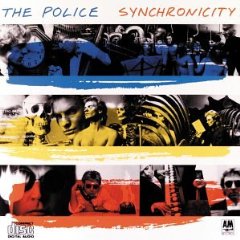
But why stop there? For a fascinating video record of the Police, check out Stewart Copeland's documentary, Everyone Stares: The Police Inside Out, which uses old Super-8 footage to show what playing in the band was really like.
And what about nighttime reading, you say? Well, of course. I'd recommend Sting's artful autobiography, Broken Music, which takes you through his life before the Police. As a songwriter, Sting turns out to be a pretty good memoirist. And after you've read that, check out Andy Summers' book,
One Train Later, the story of how a down-and-out guitar player became one-third of the world's biggest band. Even though Summers was perhaps the least famous of the three, it's an insightful, well-told story. Sometimes it's the little guys who see the most.
I could go on, talk about Stewart Copeland's Rumblefish soundtrack, or Andy Summers' records with Robert Fripp, or which Sting solo album is the best. But isn't part of the fun finding out for yourself?
Posting Soon
Sorry, everyone—I'm either a) on deadline, or b) emotionally and/or physically exhausted from Valentine's Day.....
Kudos for Kagan
HLS students held a party for Elena Kagan yesterday to express their support for the dean, who was, of course, passed over for Harvard's top job.
Harvard with a human face—very rare (one law professor said he'd never seen anything like it in 30 years, and that is truly pathetic) and nice to see. What is it about Harvard culture that so discourages such expression of actual human feeling? I suspect that, in a place that's fast-paced and competitive, people are loathe to slow down and make themselves vulnerable by expressing their appreciation for others.
Perhaps this is one area where having a female president may make a real difference—humanizing the institution. If Larry Summers brought the hyper-competive, Type-A culture of the econ department to Mass Hall, Drew Faust may bring the more collegial culture of Radcliffe, and that would be a truly radical and perhaps very pleasant change.
Meanwhile, another constituency rallied around another one of its own, as the faculty gave Drew Faust a warm reception at one of its semi-monthly faculty meetings. The goodwill towards Faust seems to have carried over into warm-and-fuzzies for the new curricular review.
For those of you keeping track, among the places writing about Faust yesterday were WHIOtv of Dayton, Ohio (wire copy), the Georgetown Hoya (whatever Harvard does, we do too), the Daily Princetonian (she practically went here!), the Bi-College News of Bryn Mawr and Haverford (she did go here!), and the Economic Times of India (is Faust good for Hillary?).
(Word is, by the way, that the Globe is sending reporters to Virginia and to Penn to scope out information on Faust's background for a lengthy profile.)
Meanwhile, the blog Gadfly has a quiz for Faust, an attempt to suss out her priorities. It's a useful provocation; we know little about what Faust wants to do, other than promote cooperation between the faculties. That's to be expected—she's only had the job for three days—but it will be interesting to hear whether she has her own priorities or is just following the roadmap laid out by Larry Summers and the Corporation.
Incidentally, has anyone yet found a single FAS professor who blogs? At an institution that's supposed to be on the cutting edge, how can it be possible that out of 700 or so scholars, not one has a blog?
Katie Couric Likes Drew Faust
On her CBS blog, Katie Couric (what is going on with her face?) gives the thumbs-up to Drew Faust. (Watch the video.)
I may be—heck, I am—old-fashioned about this, but since when did we want to hear the opinions of television anchors?
As you may have guessed, I'm not a huge Couric fan. Pretty much the opposite. (Long story, tell you sometime.) But since when has being a woman ever been anything but helpful for her? And for a feminist, she sure is obsessed with her legs.
Drew Faust's appointment is important, no question. But we don't need—or want—a TV talking head to tell us that.
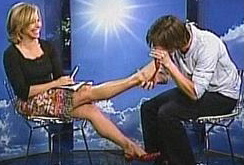
Katie Couric and fan.
Faust in the Media
Yesterday's Times profile of her is the paper's second-most e-mailed story as of this blogging...but otherwise,
poof, she's gone. Nothing (that I can see) in the Times, Globe, the Journal, WashPo, LATimes. Not much on the web.
(Am I missing anything? Anyone?)
There is, however, a wire story in The Hindu.
What does this mean? Partly that the way the Crimson and the Globe broke the news last week has diminished press interest after the official announcement.
But partly that there's just not that much interest in Faust: She's an internal candidate little known outside of her field and the world of female academics.
Does this matter? I don't know. You could say that alumni might like a Harvard president with a higher profile, and that this pebble-in-the-ocean effect can't be a good sign for fundraising. Whatever else you wanted say about Larry Summers, his celebrity status did open doors.
But I could argue it the other way, too: Summers' high-profile also meant that his mistakes attracted a lot of attention, made him a lightning rod.
Or I could argue that the world just doesn't care that much about the president of Harvard if she's not a public intellectual with achievements outside the insular world of academe.
All these things may be true. As the cliche goes, time will tell. For the moment, it's just interesting to note that the official announcement of Drew Faust as Harvard's next president—its first female president—has produced exactly one day's worth of news stories.
Make of that what you will.
How the Media Works
How did Jim Lehrer's "Newshour" land the first TV interview with Drew Faust? (That I know of, anyway.)
Well, of course, the Newshour is a natural place for a substantive conversation.
But it doesn't hurt that Lehrer is close friends with Derek Bok: the two traveled to the Galapagos together, and to a friend's villa in Italy last fall. The trips were inspired by a book club Sissela Bok belongs to...
Whoops, Missed Another One
Newsweek education reporter Samantha Hening interviewed a "Harvard expert"—actually, me—at some length about the choice of Drew Faust as Harvard's president-elect. Here's that interview.
Whoops, Missed One
In the stead of a bold albeit tactless social scientist and a former cabinet secretary, Harvard has ensconced a career academic and mid-level administrator culled from the women’s studies henhouse....Faust has carved out a niche for herself all-too-typical of the intellectual provincialism characteristic of many of this generation’s scholars, having fashioned a career scribbling about vacuous constructions of “gender” and “ritual” during a time period in which they had little acknowledged meaning.
A small sampling of Faust’s bibliography will unavoidably elicit snickers from those outside the confines of the Academy: “The Rhetoric and Ritual of Agriculture in Antebellum South Carolina,” “The Civil War Soldier and the Art of Dying,” and the above-mentioned “Altars of Sacrifice.” Meanwhile, Larry Summers effectively administered the $11-billion budget of the Treasury Department.....
—Christopher Lacaria, the Crimson
The Sound of Faust
Harvard Magazine has some solid coverage of Drew Faust, including audio of her press conference yesterday.....
(Why is it that Harvard.edu is so lame for this sort of thing? Hey, guys, remember—it's a university. 1:47 of video? You're supposed to preserve things!)
An E-mail from Harvard
Harvard historian Timothy McCarthy writes...
Regarding Drew Faust, I honestly think that she's an amazing--the best—choice for the Harvard Presidency at this moment. Remember that, as a scholar, she has redefined the field of Civil War studies. This was a largely male-dominated field when she began her work as a scholar, and she has devoted her distinguished career to understanding how the Civil War--that definitive, transformative, and cataclysmic event in American culture--affected all people who were living in the United States. In other words, scholars had for years understood the Civil War as an event that affected only men (white men), and her impressive scholarship has altered the way we think about that war in such a way as to take into account how women actually experienced the war. Her work has played an indispensable role in producing a sea-change in historical interpretation. Her work has even managed to win over most of the men who once dominated the field. She is a scholar of the highest rank, on a subject of signal importance, and her successful interventions into a male-dominated field--arguably, the most male-dominated field in all of American history—bode well for her ability to make inroads at Harvard.
That said, I want you to rethink your critique of her picture. One of the things that drives me crazy about the "punditry" is the obsession with looks, aesthetics, especially where women are concerned. Drew Gilpin Faust is now the President of the most recognizable, and arguably the most powerful, university in the world. Who cares what she looks like? That's a matter of taste, which is irrelevant in this context. Honestly, she looks friendly, decent, inviting, which is hardly a bad thing, given the past person who occupied this esteemed office. In fact, Drew is friendly, decent, inviting--and this is precisely what will make her a highly effective President of Harvard University.
A telling aside: I was at a fancy cocktail party this past weekend, and the only people who were saying anything negative or skeptical about Faust--all of whom, when pressed, admitted they knew nothing about her (other than that she was a woman)--were white men over the age of 60. Tells you something about how Harvard is changing. Welcome, finally, to the 21st century!
Monday Morning Zen

Eagle ray photo by Holly Bourbon.
Quote of the Day
f I were running al Qaeda in Iraq, I would put a circle around March 2008, and pray, as many times as possible, for a victory not only for Obama, but also for the Democrats.
—Australian prime minister (and Bush supporter) John Howard
I'm not the woman president of Harvard, I'm the president of Harvard.
—Drew Faust
Faust Around the Media World
Of course not. There is a lot of work still to be done, especially in the sciences.
—Drew Faust, asked yesterday whether her appointment meant the end of "sexual inequities" at Harvard
All the reports have been "gender, gender, gender," and I'm thinking to myself, "Isn't that funny? That has not been something we've talked about at all."
—Harvard Corporation fellow Robert Reischauer
I’ve had dialogues with my dead mother over the 40 years since she died.
—Faust, on what her mother would be thinking now
I believe Faust will bring dignity and honor back to Harvard.
—Harry Lewis
The selection of Dr. Drew Faust for the Harvard post is being described as a sharp rebuff of her predecessor, Lawrence Summers, who had angered women by presuming to disagree with them. But so far as we can tell, Dr. Faust has demonstrated competence only in Women's Studies and gender linguistics, not in math and science. Advantage Summers....
—The American Spectator
[Faust] is going to have to be outstanding [because] people see it as a knee-jerk reaction to the comments made by President Summers.
—Harvard graduate student Lydia Barlow
In that [southern] world, said one of Dr. Faust's brothers, M. Tyson Gilpin Jr., 63, a lawyer in Clarke County, his sister did some of what was expected of her: She raised a beef cow....
—DailyIndia.com
She was chosen after a search in which a number of potential candidates said they were not interested in the job....
—Canada.com
Drew Faust, the historian who has been named Harvard's first female president, has been praised for her "people skills," but she's also done brilliant intellectual work on a crucial question for our time: why we love war....Faust's interpretation helps explain the way the US responded to the 9-11 terrorist attacks with a war on Iraq. "Even a war against an enemy who had no relationship to September 11's terrorist acts would do," she notes. People supported war not just because of the rational arguments offered by the White House, but also "because the nation required the sense of meaning, intention, and goal-directedness, the lure of efficacy that war promises." It was especially necessary to restore a sense of control after the terrorism of 9-11 had "obliterated" it. The US, she concludes, "needed the sense of agency that operates within the structure of narrative provided by war."...Harvard's last president, Larry Summers, had been a Clinton administration free trade policy wonk. By choosing as its new president a scholar whose work has so much depth and significance, the university suggests a different sense of what intellectual leadership might mean.
—History News Network
Ladies, perhaps you, too, feel vaguely uncomfortable, even embarrassed for your sex during this 24/7 cartoon coverage of Anna Nicole Smith. ....But do not despair, sisters. There was another side of the spectrum this weekend....
First, Drew Gilpin Faust, expected to become the first female president in the 371-year history of Harvard University, which ditched its last president, Larry Summers, after he questioned women’s academic ability in math and science.
Here’s why I’m loving this: because it’s Harvard and everybody knows Harvard. Because Harvard matters. Because little girl Faust, recognizing a man’s world, changed her name from Catherine to Drew. Because though none of the stories I saw this week mentioned it, she happens to have a husband (Harvard professor Charles Rosenberg), two daughters and a stepdaughter. So even with family obligations, she managed to climb to the pinnacle of the vicious publish-or-perish academic world.
Critics fretted over Faust’s “toughness,” as critics always do when in comes to women leaders. I guess she’s tough enough....
—Marjorie Egan, the Boston Herald
Drew Gilpin Faust, Harvard’s first female president, seems never to have offended anyone and has a much lower Google profile than the ousted Larry Summers. A Google search for “Drew Gilpin Faust” brings up just a handful of scholarly references, none of which are available in full text on the Web. One of her books is available currently at amazon and the two readers who bothered to comment are blandly unimpressed: “This book is rather tedious if you are not a fan nor speaker of that odd language known as academia ” and “probably only a woman interested in the history of women would be interested. The entire book is very…well, womanly.” An older book earns two out of five stars: “jargon-laden prose makes this one a sleeper”.
To judge by the Amazon reviews and the Google search, we are in for some quieter times here in Cambridge....
—Phillip Greenspun's weblog (Greenspun is a student at HLS)
According to the Times story, she appears to have been a compromise candidate lacking in big-administration experience. She does have the most important qualification of all, however: she's a female woman....
—RedState.com
What Would Larry Summers Say?
Meanwhile in the Midwest, there's a controversy at the University of Illinois over one entepreneurial student project: a "girls of engineering" U of I calendar. The calendar was conceived of by a woman who wanted to break down stereotypes about smart women, but not everyone thinks that's the best way to go about doing so.
Said one female engineering student,
I've seen a few of the pictures, and I thought they were a little racy. I know their intention was to show smart as sexy, but part of being sexy is being classy.
Would this challenge Larry Summers' notions of the intelligence of women in the sciences? Or reaffirm them? Perhaps more to the current point, what would Drew Faust say? (She's going to be thinking a lot about science now, right?)
Incidentally, this does not count as Monday Morning Zen.
A typical Midwestern engineering student.
Faust Around the World
Drew Gilpin Faust, 59, a Civil War historian and dean of the Radcliffe Institute for Advanced Study at Harvard, is set to be appointed today. Faust's appointment would be a breakthrough for an institution that did not have a single female faculty member in 1970 and did not abolish quotas restricting the number of female students until 1975....
—New York Newsday
Harvard University will have its first female President in its 371-year old history when Drew Gilpin Faust is named 28th President of Harvard University on Sunday Feb. 11. Faust will also become the first Harvard president to have not obtained a degree from Harvard.
She will replace the embattled Lawrence Summers, who drew public ire for a 2005 speech....
Faust will go from being a dean overseeing a budget of about $16 million to a president taking care of $3 billion in university funds.
—The Epoch Times
The woman expected to become the first female president in Harvard University’s 371-year history helped advise her embattled predecessor after he suggested that women might have less of an “intrinsic aptitude” for science than men.
—The Boston Herald
Should the Board of Overseers confirm Faust, the Senior Vice Provost for Diversity that she created will be even more redundant than before. Expect a constant push for ever greater female and minority representation throughout the university, backed up by academic “research” showing widespread discrimination against those favored beneficiaries—research unclouded by the fact that women now run many of the nation’s most prestigious universities. Unbiased inquiry into why certain groups may not enjoy proportional representation in scientific and technical fields, of the sort that Summers engaged in to his demise, will be even more proscribed. This triumph of feminist ideology is a tragedy not just for Harvard, but for the American academic world...
—City Journal
As seems to be becoming routine around here, this much anticipated announcement is kind of underwhelming.
There’s something to this particular civil war historian that has made her immensely appealing to universities in search of a female president. In the lsat five years, both Chicago and Penn have reportedly prostrated themselves before Faust, who unceremoniously spurned each suitor, perhaps with Larry “El Toro” Summers’ Massachusetts Hall digs in her sights.
From an undergraduate’s perspective, however, Faust is fairly anonymous. Her name is vaguely recognizeable, as the head of the two Task Forces on Women established after Larry’s unfortunate outing into the academic no-man’s-land of innate gender differences. She’s popped up in The Crimson’s pages before, both as a contender for the top Faculty of Arts and Sciences job (which went instead to William C. Kirby) and as the head of the performance-space-gobbling Radcliffe Institute. (Which, in real terms, is probably one of Harvard’s least significant administrative units. I’m sure it does plenty of good things for the faculty, graduate students, and WGS concentrators who are its constituents, but all told that isn’t a whole lot of people.)
—Adam Goldenberg, Gadfly
(And don't forget to check out the comments thread....)
Looking Presidential
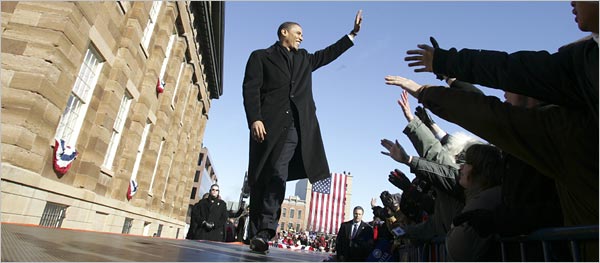
Drew Faust, Truth-teller
In the Globe, Maria Sacchetti profiles Drew Faust.
Faust, an award-winning historian expected to be named Harvard's president today, reveals much about herself and her work habits in a three-decade career as a scholar of the American south. Her goal, she has said in interviews, is not simply to tell the stories of the neglected. Instead, colleagues say, Faust wants to confront the truth -- even when it is ugly.
Then, in a line of reasoning I don't quite follow, Sacchetti argues that....
Faust's approach to history parallels the contradictions in her own life.Described as good-natured and unassuming, she has devoted years of research to some reprehensible characters, such as slave-owner James Henry Hammond. She also studied Mary Chestnut , a Southern elitist who excoriated slaves and insulted a white woman in North Carolina who protected her from Yankee invaders.
"Sometimes I couldn't resist using those, probably because they weren't entirely representative but were such an extreme that they did have that startling effect that reminds you who these people were," Faust said in the magazine article, "and that they are not you."
I'm not sure how studying reprehensible characters parallels contradictions in Faust's life—I'm not sure Sacchetti even establishes that there are contradictions in Faust's life—but never mind. The piece is an interesting look at Faust's scholarship.
The Corporation, the Press, and the President
A few days ago, after the Lampoon folks sent around a joke e-mail announcing a new Harvard president, I half-seriously posed the question of whether the search was becoming a joke. The Corporation needs to wrap this up, I said. Soon.
Some of you got on me for that, saying that I was over-reacting, it was just the Lampoon, etc. Perhaps my "joke" characterization was overly strong.
But, in fact, the Corporation agreed with me that to wait very long would be to let Faust twist in the wind, and so it did not wait very long.
Moreover, the way the news of Faust's selection has broken is not exactly confidence-inspiring. The Crimson and Globe get it three days before the official announcement. The Times runs its big piece on Saturday morning—which, any media type will tell you, is the worst possible time to disclose news you want to get a lot of attention.
By Monday, the news elements of the story will be secondary, and the analysis—why was she chosen? Is she up to the job? etc.—will be the stories in that day's newspapers. That could not be what the Corporation wanted. I don't usually agree with the Corporation's obsession with secrecy, but if you're going to insist that the process is secret, don't blow it days before your big surprise announcement.
I gather that Faust held a bizarre press conference at Penn yesterday, at which she refused to answer any questions. At least one reporter covering the Harvard story for a major newspaper was seriously irritated by that.... Why hold a press conference if you're not actually going to answer any questions? It looks like amateur hour.
The media management has not been well done so far, and it has diminished some of the luster of Faust's announcement. (And as I've told several reporters, I do think that the appointment of a woman to head Harvard is important. Sure, there are other female Ivy League presidents. But who in China or India has ever heard of Brown?)
No one can say if this bungling will matter in the long run. But it's certainly not the way the Corporation would have liked this process to unfold and suggests once again that, for the second straight time, a clandestine search process has hit major hurdles.....
Drew Faust at Bryn Mawr yesterday.
The Times on Faust
Drew Faust's pick lands on page one of the Times today, mostly below the fold.
(Note to Harvard's PR team; it's time to get a new picture of Faust out there. This one looks like a perfectly fine shot for a professor...somehow underwhelming for a president-elect.)
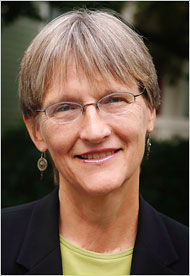
Times reporter Alan Finder quotes me a bit in the story, to this effect:
“The real import of this choice is that it is a cautious pick, which seems targeted at healing the wounds of the Summers years and restoring Harvard’s momentum as quickly as possible,” said Richard Bradley, who wrote “Harvard Rules: The Struggle for the Soul of the World’s Most Powerful University” (HarperCollins, 2005).
Mr. Bradley said there were legitimate questions about Dr. Faust’s qualifications, like her lack of experience running a large university. “The fact that Harvard could not find someone who filled all their bases suggests to me the difficulty that Harvard had to fill the position,” he said.
Some explication—because he and I talked for about half an hour, and so there was slightly more context here than the article can easily suggest.
I do think Faust was a conservative pick; given the context of this presidential search, choosing a man and a scientist, perhaps even one with no Harvard connection, would have been a bolder pick. Not necessarily a better one, but bolder.
Finder asked me if I thought the various questions raised about Faust's move from Radcliffe to Harvard president were fair, and that's why I said that I thought the questions were legitimate. It is a big step; we have no idea how well she'll do. A fair question.
But the last part of that quote suggests something I didn't really mean. (I'm not blaming Finder, I'm sure I said it, but it comes across a little differently than I remember in context.) What I was trying to say is that Harvard couldn't find anyone who covered all the appropriate bases because it's such a hard job to fill—slightly different than saying "the difficulty Harvard had to fill the position."
I meant that there were so many things this new president was expected to do—heal wounds; unite the university; continue science expansion; fundraise; plan Allston; etc.—that it would be virtually impossible to find someone with experience in every relevant field.
Again, I don't blame Finder, just my own inarticulateness. Because I genuinely did not mean to suggest that Faust was a second-tier candidate. Legitimate questions about her? Sure. But clearly she was a leading candidate from word one.....
Faust Gets The Rudenstine Seal of Approval
In the Crimson, Javier Hernandez smartly thinks to get former president Neil Rudenstine on the phone to see what Rudenstine thinks of the choice. The answer: Two thumbs up!
"I think she is a person who can bring other people together and at the same time she has tremendous clarity of vision and she's able to be very, very decisive in her very tactful and very strong way," the former president, who first appointed Faust to be dean of Radcliffe in 2000, said.
Of course, it's not a shock that Rudenstine would support Faust. But would someone please, please get Larry Summers on the phone and hear what he has to say? It would probably be diplomatic, but...you never know. One suspects that he would have an interesting take on the decision.
Last But not Least
The Times has this story on Drew Faust....
Dr. Faust’s colleagues describe her as a consensus-builder, in contrast to Dr. Summers, who made many enemies on the faculty with his brash and abrasive style and his drive to overhaul a culture on the campus that some thought had become complacent....Some other faculty members, though, who declined to be identified, said they feared that Dr. Faust lacked the vision and tough-mindedness to be a strong leader.
You heard it here first: Drew Faust's honeymoon will be the shortest in the history of the Harvard presidency
.
Quote of the Day
Sixtysomething Caetano Veloso is the Bob Dylan of Brazil—a sly and prophetic songwriting genius given to spurts of wild unpredictability. And like Dylan's, Veloso's late-career albums rank among the best he's ever recorded.....
—Blender magazine, "The CD We're Totally Gay For," March 2007 issue
Pick of the Week
Well, it would have to be Drew Gilpin Faust, wouldn't it?
In honor of Faust's ascension, I recommend her book, Mothers of Invention: Women of the Slaveholding South in the American Civil War, winner of the Francis Parkman Prize in 1997.
I can't say as I've read it myself, but Publisher's Weekly writes,
Women of the South after 1865 confronted both their doubt about what they could accomplish by themselves and their desire to avoid reliance on men. The women's rights movement in the South thus grew from necessity and disappointment-a sharp contrast to the ebullient optimism of its Northern counterpart. Faust's provocative analysis of a complex subject merits a place in all collections of U.S. history.
And here (and here) are a couple of interesting web conversations about the book....
A Different Kind of American Dream
The Harvard Crimson and the Boston Globe both report today that Drew Gilpin Faust is expected to be the next president of Harvard, pending confirmation by the Overseers, who are apparently holding a special meeting on Sunday.
There are other female university presidents, of course, and even other Ivy League female presidents.
Nonetheless, the fact that a woman will be at the head of the most famous institution of higher learning in the world is something to be remarked upon. Is it overdue? I'm not sure. But it is certainly time. And the fact that we learn this news on the day of Anna Nicole Smith's death seems somehow appropriate: While one woman's life ends—a life based on fantasy—another woman's life, one based on hard work, reaches a new pinnacle. There's a certain poetry in that.
Much will be said, pro and con, about Ms. Faust in the days to come. Advice will pour in from all quarters. The left wing will cheer, the right wing will jeer.
But for the moment, let us just offer her congratulations and best wishes.
An American Death
It will be easy to sneer at the death of Anna Nicole Smith, because the media frenzy will be off-putting and because Smith herself didn't always seem to have much self-respect. Already the manufacturers of high culture are writing about her disdainfully, like these two (female) reporters from the Times:
Anna Nicole Smith, a former Playboy centerfold, actress and television personality who was famous, above all, for being famous, but also for being sporadically rich and chronically litigious, was found dead on Thursday....
I can't say that her death rises to the level of the tragic; it is probably closer to the pathetic. But still—let's pause for a moment to consider.
Smith wasn't "famous for being famous"; she was famous for being a sex symbol, which is something altogether different and considerably more interesting. Nor was she "sporadically rich and chronically litigious"—what a condescending, bitchy little remark that is, in the first sentence of someone's death notice. (The only litigation Smith was involved in that I can think of was brought against her by someone else.)
The Times goes on to say,
Ms. Smith, at least in her mature years, was obtrusively voluptuous and almost preternaturally blonde.
That's a snarky way of saying that she was a thin, flat-chested teenager who remade herself into a (very) buxom blonde. "Obtrusively voluptuous." Would a Times reporter ever be allowed to inject such snark into an article about a man who died?
I won't say that there is great profundity in Smith's life and death. Much of the former was tawdry, and probably the latter will turn out to be the same.
Still, there was something distinctly, wonderfully American in her story, whether we care to admit that or not. Her real name was Vicki Lynn Hogan. She grew up in Mexia, Texas, population about 6,000, located, as its own website says, "at the intersection of U.S. Highway 84 and State Highways 14 and 171." Embedded in that self-description is a claim—"We exist! Really!"—and a plea—"Please visit."
She would marry when she was 16, give birth to a child at 18, divorce the same year. She was a rural Texas girl from a white-trash family—and I'm not a fan of that phrase, but if any family ever merited it, Smith's did—of no particular schooling or intelligence who used the only real asset she had, her body, to advance herself. After changing her name, one of the great American means of remaking yourself, she went from working in a topless bar to
the pages of Playboy to a Guess! jeans model, which may not sound like much to some of us but is, in American popular culture, a perfectly legitimate upward progression. We can trace this from Ben Franklin to Sister Carrie to Jay Gatz to Bill Clinton. It is possible that, when men follow such a progression, they are celebrated, and when women do, they are disrespected—even by other women.
And though her physique and her looks were not always constant, and
her body was so curvy it was almost cartoon-esque, there is no question that, for a time, Smith was truly beautiful. If you were to choose one woman over the past twenty years who
epitomized the American sex symbol, no one else would even come close.
Like many women, Smith married for money—she was just more over the top about it than most. (She was more over the top about everything than most.) Her husband, Texas billionaire J. Howard Marshall, was about 130 years old at the time of their marriage. Well, so what? Each, presumably, gave the other what he or she wanted, and who are we to judge?
When Marshall died and left the bulk of his fortune to Smith, his family sued and the case went all the way to the Supreme Court. Thus we were treated to the spectacle of a Playboy pin-up walking up the steps of the United States Supreme Court in Washington. The case may not have been of enduring importance—but again, there is something powerfully American in the image of a Playboy pin-up getting her day in court, just like the rest of us, and not just any court but the highest court in the land. Our democracy extends from the high to the low, and that moment encompassed everything in between. Mocking it misses what is inspiring about it.
Her life seemed to have spiraled out of control in the last few months, after the death of her son occurred almost simultaneously with the birth of a new daughter of uncertain lineage. She died yesterday in—where else?—a Hard Rock Hotel & Casino on a Florida Indian reservation. (A slip of the tongue, and it's the "hard luck hotel and casino.") Her body was taken to a hospital in a town called Hollywood.
Think of all that is American in this—the strains of heritage and culture and fable, of gambling and glitz and illusion and heartbreak.
That, I think, was Anna Nicole Smith's genius, if not her intelligence: She believed so deeply, so uncritically, in a certain kind of American dream, that everything she did fulfilled it, even the manner in which she died.
And though some of the carping creators of elite culture may not approve, there is something quite sad and moving in that, something that tells us a bit about our country and its myths. For who among us can say that, if we were born Vicki Lynn Hogan, to a poor, uneducated family in the dusty town of Mexia, Texas, we would have not dreamed the exact same dream that she did?
The Real World Comes to Harvard
Dateline: Starbucks, Boca Raton
Both the Crimson and the Globe report on Harvard's newly proposed "real world" curriculum. Without having had the chance to read the report yet, I'll withhold comment....
Meanwhile, I love this story of what happens when a mainstream reporter for a hidebound news organization stumbles into the blogosphere. Jay Carney is a fine reporter (and a friend of mine), but he goofed this one pretty badly.... And as I can tell you, one of the great things about writing a blog is how quickly people will tell you when you screw up—and one of the prerequisites for the job is knowing when to admit that you're wrong.
Finally, here's an amazing story about killer whales—you can never get enough good killer whale stories—hunting in a pack. What were they hunting? Stingrays. While one whale pinned them down, the others tore them apart. And two divers saw the whole thing....
More Thoughtful Posts TK
Thanks so much for your patience—and your comments—while I'm here in Boca, writing currently from a Starbucks. I don't like Starbucks coffee much—I prefer Peets—but I'm a huge defender of the chain. Where else can you find a public bathroom in Manhattan? Hang out with a cup of coffee and log on to the Internet?
Meanwhile, a young couple is laughing and flirting at the next table over, and one of the barristas is chatting with the guy who wants to be her boyfriend and is waiting for her shift to end. Sweet.
Also, the Gold's Gym here is pretty great. Like an airplane hangar with weights.
Otherwise, Boca is not really my scene.
But I digress.
Why am I here? (As James Stockdale would say.)
I don't want to give away too much, but as some of you know, I am working on a book about baseball—the Yankee and Red Sox pennant race of 1978, in short—and, of course, Florida is a pretty good place to find baseball players. I was down here to interview one. Who? Oh, all right, I'll give you a hint. He once posed for Playgirl. Not enough? How about this: His middle name, in a certain New England state, begins with the letter "f."
In other miscellaneous news, I agree with Richard Thomas' interpretation (in the comments below) of Peter Gomes' editorial—wait, get it right, don't feel the need for a star, Harvard will make that person a star. I quoted him to exactly this effect in
Harvard Rules, and I doubt that his faith in the institution has flagged since then. (In fact, very likely the contrary.) I think the Reverend's knowledge of Harvard history helps him to take the long view.
Also, his faith in God.
And while I am flattered by my nomination to be the secretary of the Corporation, I doubt the current holder of that job has any inclination to leave it. And, heck, I'd only take the job if I could agitate for greater transparency on the part of the Corporation, and urge its fellows to visit the Harvard campus. Well...places on campus other than Loeb House.
But the truth is, I'd be a terrible Corporation secretary. I'm much more used to writing about the rich and powerful than keeping their secrets. At this point, that'd be a hard habit to shake.
Windows News
I feel bad for my cousin Lucy, whose Windows laptop was out of commission for a week because of a virus—it kept taking her to webpages she wasn't choosing. Wonder what information it took from her hard drive while it was doing that?
Meantime, I happened to wander into Staples the other day and saw that the company was advertising that they would install Vista on your computer for free, even though it was a "$59.95 value." Hilarious. First, what an arbitrary determination of value. Second, the idea that your software is so confusing and hazard-filled, you have to pay someone to install it......
Drew Faust in the News
The Philadelphia Inquirer profiles Drew Faust under the headline, "Local Favorite tops Harvard's Short List."
News of Faust's prominence in the search spread throughout Penn and Bryn Mawr yesterday, exciting officials, who spoke glowingly about Faust. "I think she's everything a Harvard president should be. She's just what they need. Being an alum of Harvard, I will be among the many who are really celebrating," said [U-Penn president Amy] Gutmann.
Faust clearly has the support of women—although whether that would help or hurt her with the Corporation is not obvious.
"She is very, very smart about people and about institutions," said Demie Kurz, a sociologist and codirector of the Alice Paul Center for Research on Women, Gender and Sexuality and the Women's Studies program at Penn. "She has a great deal of integrity and a great deal of diplomatic skills." Kurz, who worked with Faust at Penn, said Faust displayed "consultative" leadership that engendered respect from staff.
"Consultative leadership." Hmmm. That's the kind of remark that clearly frames Faust as the anti-Summers.
Meanwhile, at Harvard, Jamie Houghton is feigning Alzheimer's.....
...and the Lampoon apparently pulled a prank. Does their prank suggest that the presidential search is becoming a bit of a joke? This needs to be wrapped up soon.....
Monday Morning Zen

Interpret as you wish.....
Summers on Higher Ed
Larry Summers spoke at N.C. State about the role of higher education in American society, and he said nothing controversial.
On a similar note, the Harvard Corporation apparently did not choose a president yesterday. Does this bode ill for Drew Faust?
Super Bowl Impressions
Let's start with the good....
Prince rocked. The best Super Bowl halftime show ever. Great song choice, great stagecraft, blistering guitar, some actual improvisation (the rain shout-out), and a blissful version of Purple Rain. "Is Prince still relevant?" a friend texted me during his performance. Absolutely.
Also, good for Peyton Manning. He really is an incredible athlete and a pleasure to watch.
Finally, all the hype about the fact of two African-American coaches didn't destroy the feeling that it was, in fact, kind of cool that there were two black coaches.
That's about it for the good. Now, the bad.
1) The game was dull. Without a doubt, the rain affected play for the worse.
2) Rex Grossman is the worst quarterback on a good team since, well, Eli Manning. The Bears should cut him, and then he and Manning can open a burger shack together, somewhere very far away from New York City.
3) The best I can say about Jim Nantz and Phil Simms is that I missed John Madden. As for the pre-game, Boomer Esiason and Dan Marino are pretty good. But why is Shannon Sharpe yelling at me?
4) Katie Couric appears to have had still more work done. If you stretch her cheek, does it snap back?
5) That was the worst bunch of ads in Super Bowl history. Not funny, not original, often offensive—was there an ethnic or sexual stereotype omitted?—and generally not very good at shilling for their products. The New York Times loved GM's ad about the assembly-line machine that worries about what will happen if it lapses in quality. To me, it felt like an allegory about a laid-off GM worker who jumps off a bridge.
(Apparently I'm right and the Times is wrong, because a team of scientists who wired people's brains during the Super Bowl found that that ad "produced big spikes of anxiety and perhaps ... feelings of economic insecurity.")
6) Did no one at Prudential understand that "a rock" sounds like "Iraq"?
7) It might have been nice for at least one ad to note that tens of thousands of American soldiers are fighting in two foreign countries, and some of those soldiers were actually watching the game.
8) I have no idea what "the Coke side of life" means, and it certainly isn't going to make me buy one.
9) The Kevin Federline ad was effective because, of course, he is much more believable as a fast-food slinger than as a hip-hop singer.
10) The Snickers ad, showing two men performing what looked to be a distasteful sexual act reminiscent of the infamous party scene in Requiem for a Dream, was just ghastly.
11) Similarly, the General Motors ad showing men ripping off their shirts and washing a car carrying some attractive women was bizarre and inexplicable. No one wants to see flabby, hairy male chests surrounding a group of anxious women. Then again, no one wants to see GM cars, either.
12) Sheryl Crow ought to spend less time making endorsement deals and more time making music. That version of "Not Fade Away" is horrific. She has become so bland that she is, indeed, in danger of fading away.
In general, you get the feeling that ad agencies need to hire some adults. I understand the need to go young, but between this crop of ads and the whole guerilla marketing fiasco in Boston, it's time to reign in the kids.
All told, a bad game on both the athletic and the spectacle levels. I can't wait for spring training. (Speaking of which, I'm going to Florida tomorrow for some book-related interviewing, so...Harvard Corporation, don't do anything crazy while I'm gone, okay?)
Dylan versus Veloso: The Debate Continues
After I suggested that Caetano Veloso was perhaps a more accomplished and radical figure than Bob Dylan, a number of you rose to Dylan's defense. Dylan, you commented, was the "soundtrack of the '60s in the U.S." Was Veloso in Brazil?
In fact, pretty much, yes.
Here's a concise description of the nature and import of the tropicalia movement.
In late '60s Brazil...
....the progressive impulse is subverted in a right-wing military coup (supported and encouraged by the United States) which profoundly affects the Brazilian arts and the public. Television and Opera maintain a certain degree of freedom from censorship at first, but revolutionary socialism seems unable to articulate an effective resistance.
Enter Caetano Veloso and Gilberto Gil. In this matrix of political and nationalistic uncertainty, and through the use of pastiche, disassociative imagery, irony, parody, and a concern with the everyday frustrations of Brazilians, they construct an insurgent music that gains a wide reach and audience, while mostly flying underneath the dictatorship's radar screen. Refusing the government's attempts to force a highly nationalistic concept of unity on the populace, Tropicalia deploys the benign imagery of tropical paradise, only to subvert them with references (sometimes overt, sometimes oblique by necessity) to social and political trauma. The more orthodox leftists, of course, criticize Tropicalia for not directly inciting the masses to act, and instead promoting escapism. Yet Tropicalia's moment in the sun is not only threaded in the past of Brazilian historical discourse on modernity, but serves to feed a growing countercultural movement in Brazilian culture throughout the late 1960s and 1970's. By foregrounding areas of Brazilian socio-economic underdevelopment, Afro-Brazilian religion (Macumba, Candomble), and the historical legacy of Portugese colonialism, Tropicalia stakes out a lasting ground, and a usable past for Brazilian counterculture.
But of course, since we Americans had our own problems, we weren't paying much attention to what was going on in a country that's actually larger than our own. (Well, if you exclude Alaska.)
As one alumnus of the era puts it,
We changed the world while dancing to [Dylan's] tune. Veloso may be a brave man, and the struggle in Brazil at that time may have plenty of meaning for Brazilians, but it doesn't compare to what we did.
[A digression: You can dance to Dylan?)
The poster is right: Caetano's work doesn't compare. It was actually more courageous, if not quite so celebrated by the self-involved American left.
Meanwhile, Harvard classicist Richard Thomas eloquently stands up for Dylan, quoting some perhaps unfortunate Veloso lyrics ("I hate, I hate, I hate") and citing this Veloso quote:
Dylan
“is an artist who hides his personality behind the art he is creating. He would never ever touch his work with explanation or analysis. And I am the opposite. I am almost not an artist.”
Since this presentation of himself is obviously untrue, Veloso is here playing with words and ideas. (Which is to say, he's messing with us.) His remarks can not be taken at face value—although, since we Americans are so inclined to believe in our cultural superiority, as manifested by Dylan, and therefore the generalized inferiority of South America, we are inclined to interpret this remark as, merely, appropriate modesty. In fact, one of the knocks on Veloso is that he is arrogant—he is—and so I would suggest that this comment actually means the opposite of what it says. Veloso defines an artist in a way that suggests that he is more analytical, more intellectual, less calculating and perhaps more candid than Dylan is. But since he is engaging in false modesty, perhaps he isn't so candid after all; perhaps he is profoundly calculating. Which, by his definition, would make him more of an artist than Dylan.
Got that?
But rather than risk over-interpreting one quote—although I don't really think it's over-interpretation, because Veloso is a thoughtful man whose words can sustain deconstruction—let me just posit a few thoughts.
First, a premise: I'm an admirer of Dylan and don't mean to take away from his lyrical virtuosity (although, Mr. Thomas, I'm sure that one could easily enough find a Dylan lyric, take it out of context, and make it look silly).
But, come now—Dylan had it much easier than Veloso. First, he was drawing on a long tradition of protest music—for a time, frankly, merely imitating it. (The Dylan exhibit at New York's Morgan Museum makes just this point.)
Second, Veloso was making his music of protest under a military dictatorship. He was jailed and then exiled for his troubles. Dylan never operated under conditions remotely so perilous. He became rich and famous and adored. He was counter-culture not just because it was right, but because it was cool. Could this be one reason why, as Veloso says, Dylan doesn't explore his own motivations?
And finally, Dylan benefits of course from the narcissism of the American Baby Boomers. He was, as someone put it, their "soundtrack." (Although black Americans might disagree with that.)
Now, in his recent period of critical rediscovery and adulation, he benefits from that aging generation's desire to finalize its history—a Dylan exhibit at the Morgan Museum! Could there be a more appropriate metaphor for the '60s generation, a once embraced and entombed within a gilded mausoleum of all-conquering American capitalism? The current vogue of Dylan reflects little more than a generation's ongoing desire to memorialize itself by establishing critical monuments for its celebrity heroes. Not only that, but because Dylan is American, he is automatically coronated as "#1!" by the Baby Boomer cultural hype machine. It's the jingoism of the American haute bourgoisie. Dylan is to the intellectual set what Barry Manilow (whom the New Yorker also recently rediscovered) is to middle America.
Professor Thomas, for example (who, to be fair, is English, I think) describes Dylan's latest, "
Modern Times," as "brilliant." All due respect to Professor Thomas, but...not a chance.
Don't get me wrong: Modern Times is a very good record. But it's not innovative and it's not all that interesting. It is well-executed and comfortable; it is your favorite sweater, your most beloved Barcalounger, brunch music for the coffee shop generation(s). It's no surprise that Dylan signed an exclusive deal to sell it at Starbucks. As a soundtrack, it makes great background music.
Truth is, one of the reasons we all like Modern Times so much is simply that
it doesn't suck—and after such a long career, that's not nothing. It inspires all of us who won't again see our 20s. But brilliant? I'm sorry, no.
And we haven't even talked about Dylan whoring himself out to Victoria's Secret.....There's only one reason to compromise yourself so, and that's sex, and somehow, I doubt that that is the currency in which Dylan was paid.
At Harvard, Tick-tock
Javier Hernandez and Daniel Schuker report in the Crimson that the Harvard presidential search committee is meeting today with the Board of Overseers, prompting those of us with too much time on our hands to wonder if all involved will really pass up the Super Bowl to name a new president today.
(Go Colts, by the way.)
And in the Globe, Maria Sachetti (who is this mysterious new scribe on the scene?) and the M-Bomb report that Drew Faust now "appears" to be the leading contender for the presidency.
Sachetti and Bombardieri lead their piece this way—and I think their wording is significant.
A prominent female historian and Harvard dean, who has never run a major institution, appears to be the front-runner for the Harvard University presidency now that a Nobel prize-winning scientist has bowed out.
The key words there are "who has never run a major institution." If indeed Faust is the choice, this caveat may well become a cliché.
Am I wrong, or is there something of a subswell—that's like a groundswell, except underground—to stop Faust? I've sensed it in some comments folks have made to me lately—a concern about whether she can move from managing Radcliffe (which, let's be honest, a good percentage of the Harvard community doesn't take seriously) to running Harvard.
First, of course, was Peter Gomes' editorial in the Crimson, which appeared to be a warning to the Overseers not to be hasty, which would appear to be a shot against Faust, since, without Thomas Cech in the running, she is the default candidate.
Second, consider this quote from the Globe:
Some professors, alumni , and others say that the other two internal candidates, law school dean Elena Kagan and provost Steven E. Hyman , could have been hurt by their ties to Summers, who hired them. He did not hire Faust, but she appeared to be a closer adviser to him than the others, according to two professors who spoke on condition of anonymity.
A
closer adviser to Summers? Well, well. When exactly did you stop beating your wife, Ms. Faust?
The long knives have come out.
But wait! (And here I will mix metaphors.) Because the hits just keep on coming.
While some faculty and alumni are delighted at the possibility of a Faust presidency, others, who refused to be quoted, said they believe she would not be a strong leader. Several professors said they view her as more cautious than creative, prone to expressing middle-of-the-road ideas. Some of these critics worry that Harvard's search committee is so concerned about finding someone different from Summers that they are going too far in the opposite direction.
Interesting. These criticisms have never made their way into print before. But now that a Faust presidency appears on the verge of becoming a reality, her detractors are (yes) taking off the kid gloves.
What's going on here? As Peter Gomes suggested in his wonderfully cryptic Crimson editorial, it's nothing less than
a struggle for the soul of the world's most powerful university....
Meanwhile, as the Crimson points out, the Corporation finds itself in a very difficult bind. If it names Faust now, it may look as if she were the second choice after Cech, coming so soon after Cech publicly withdrew.
But if the Corporation waits, and reconsiders other candidates, Faust twists in the wind...and if they let her twist for too long, would she—as any self-respecting human might—withdraw her candidacy?
What has already been established is that if Faust is named president, she will not march into the office at the head of a parade. I fear that already this has been successfully framed—by events, and by Faust's doubters—as an underwhelming choice.
Just remember that phrase from the Globe:
who has never run a major institution....Isn't it funny how a search process that began so harmoniously—everyone on the same page, coming together, healing Harvard, etc.—has so rapidly disintegrated?
One of the questions that will—and should—be asked in the aftermath is,
Has the Corporation botched its second straight search?
A second one will be why so many people didn't want the Harvard job. My sleeper candidate, David Oxtoby of Pomona, withdrew from consideration, according to that university's newspaper, which runs with the headline, "
Oxtoby Says No Thanks to Harvard."
Here's another perception problem: If Drew Faust is named president, she may be seen as having gotten the job because she was one of the few who wanted it...and people will wonder if her desire to be Harvard's first female president kept her in the running long after others whom the Corporation wanted more bowed out.
Meanwhile, the Yale Herald prints a short item—wickedly written, I must say—with the headline, "Harvard Gets Rejected."
It reads:
After years of sending out rejection letters by the metric ton, Harvard is finally getting a taste of its own medicine. The university has met with unusually forceful denials in its attempts to fill former President Lawrence Summers’ shoes. Former Yale College Dean and Duke President Richard Brodhead, BR ’68 GRD ’72, brusquely rejected the Cantab presidency, saying, “I already have a great job.” Stanford Provost John Etchemendy is no more willing, bluntly stating, “I am not a candidate.” Tufts University President Lawrence Bacow and Cambridge’s Vice Chancellor Alison Richardson have expressed similar sentiments. Judging by the general apathy of these top candidates, it’s pretty apparent that these days, no one wants to go to Harvard.
A little over the top at the end there, but still. Perception is reality, folks—something Larry Summers understood—and I guarantee you that whenever a president is named, the Harvard spin machine will not be able to keep this question—Why did so many say no?—out of the press.
Why not?
Because it's a fair question.
Friday Pick of the Week
You may have read the recent New Yorker article about Brazilian singer Caetano Veloso and his new album, Ce. In it, Sasha Frere-Jones makes the point, well-known to Veloso fans, that Veloso is often described as Bob Dylan.
No offense to Dylan, but I think it's really the other way around. While Dylan is thought of as a rebel and a protester, Veloso is far more radical, far more dangerous, than Dylan ever was; Veloso was actually jailed in the late 1960s by the military dictatorship in Brazil—with no charges filed, and how terrifying that must be—before leaving for a multi-year exile in France. As one of the founders of tropicalia, the Brazilian protest (in the right context) music that has helped to capture that country's image of beauty mixed with tragedy, Veloso has had a profound influence on the music of a nation that's bigger than the continental United States. And as ambitious a lyricist as Dylan is, Veloso challenges his listeners a bit more, I think.
He does the same musically—Veloso seems to experiment with different styles on every album—and Ce is no different. Frere-Jones calls it a rock album. I guess, but it's not really like any rock you've ever heard. In different places, it's weird and catchy and lovely, sometimes difficult and sometimes almost instantly addictive.
Give it a listen on iTunes—the second song, "Minhas Lagrimas," is a nice place to start. And those who really like it might want to read his autobiography, Tropical Truth, which is both a personal history and a social, cultural and political one. Veloso is a fascinating man, well worth getting to know.
Peter Gomes to the Corporation: Don't Screw Up
The Rev. Peter Gomes, who probably knows as much about Harvard history as anyone alive, airs his views on the next Harvard president in today's Crimson.
He is probably the first person on the Harvard campus to publicly consider the names in play at the moment.
Noting that the last two presidents have been "outsiders," Gomes notes that it may be time for an insider to ascend to the top job.
And yet the insiders who remain on the list each present some interesting problems. The Provost may suffer from too close an association with the most recent administration, although there are many who regard his as the humane face of that administration, and he is an accomplished scientist who has a reputation for getting things done without scaring the horses. The history of provostial appointments to the presidency, however, is not encouraging. The dean of Harvard Law School is much beloved in that faculty which has a reputation for insisting on its own priorities. It refused to consider a move to Allston in the face of strong presidential pressure to make the move. The dean of the Radcliffe Institute presides over one of the great institutional mysteries, and is rumored to contemplate as her first administrative move renaming the whole place Radcliffe.
It's quite curious, how Gomes shifts to a lightly joking tone when he speaks of Drew Faust; is he writing on tiptoes because he thinks he's writing about the next president?
Gomes also warns that the Board of Overseers, which of course confirms the presidential choice, must rummage around in a closet somewhere and find itself a spine.
This means most especially that the Overseers must do more than apply their customary rubber stamp. They above all must remember that they have a moral duty to assay the intangible qualities essential to an effective presidency. Pro forma consent contributes to the problem and not the solution.
Finally—and there is much history interspersed between these comments—Gomes says that the Corporation should take its time, because time will enhance the likelihood of that group making a good choice.
If they don’t, the future is too terrible to contemplate. If they do, our best years are ahead of us.
Judging from that rhetoric, Mr. Gomes would appear to agree with the Crimson on one point: Harvard is at a crossroads.
So here's a question I have: It is perhaps weeks away from the announcement of a new president, perhaps days, and yet this is the first public commentary I've seen on the subject by a Harvard authority figure.
Why?
Is it because no one cares? Is it because the Corporation's obsession with secrecy is contagious, and infects the ability of the rest of the campus to feel free to talk? Is it because people feel that they'd rather be seen as behind-the-scenes influences than public voices? Is it because they don't think the Corporation gives a damn what they might say in print?
How odd it is that, at a place supposed to foster debate and free thinking, the governing body squelches discussion of the most important question on the Harvard campus.
Regardless of who is chosen president, the great, vexing problem of the Corporation and its anachronistic, unhealthy obsession with secrecy will remain.
One More Quote of the Day
(Because everyone is so interesting today! Congratulations, all of you!)
This is a baby. This is a blessing from God. It is not a political statement. It is not a prop to be used in a debate by people on either side of an issue. It is my child.
—Mary Cheney, Dick Cheney's lesbian daughter, simultaneously stating the obvious—"this is a baby"—and denying the obvious ("It is not a political statement").
Hmm. Let's see. Well, her father's administration is against gay marriage, against gay people having children, against unmarried people having children, against gay people adopting children. Her mother writes patriotic children's books targeted at the children of heterosexual married parents. Mary Cheney has campaigned for her father and his boss in two elections, during which she never uttered a peep of dissent about the GOP's anti-gay positions. And she's gotten her Time-Warner job and a million-dollar book deal out of her political identity.
But now that it's
her baby, nope, nothing political about it.....
What ghastly hypocrites these people are.
Sometimes My Alma Mater Does Me Proud
The master of Calhoun College at Yale has just sent a college-wide e-mail asking that the students in his college please stop having sex in the showers.
The college showers are to be used by individuals for hygenic purposes only. They are not to be used by couples engaged in intimate activity--especially that kind of activity that leaves the showers in a decidedly less hygenic state.
It's actually quite a well-written e-mail....
Quotes of the Day
Simultaneously sycophantic yet self-aggrandizing quote of the day:
She listens to everyone and manages actually to hear not just what’s said but what isn’t said. And, having heard all the notes and half-notes, she emerges with a melody that harmonizes all the tunes she has heard but that’s distinctly her own.
—Laurence Tribe on Elena Kagan in the Crimson
Boneheaded quote of the day:
I mean, you got the first mainstream African-American who is articulate and bright and clean and a nice-looking guy. I mean, that’s a storybook, man.
—The always articulate Joe Biden on Barack Obama in the New York Observer (the entire article is well worth reading)
Romantic
contretemps quotes of the day:
These are statements I consider damaging to my dignity...To my husband and to the public man, I therefore ask for a public apology, not having received one privately.
—Veronica Lario to her husband, former Italian prime minister Silvio Berlusconi, after her husband of 27 years publicly flirted with other women, including an alleged proposal of marriage.
Your dignity should not be an issue: I will guard it like a precious material in my heart even when thoughtless jokes come out of my mouth. But marriage proposals, no, believe me, I have never made one to anyone. Forgive me, however, I beg of you, and take this public testimony of private pride that submits to your anger as an act of love. —Berlusconi's simultaneously shameless yet charming public apology to his wife
Incidentally, if you do the math, that would make Berlusconi 43 years old when he married his then-23 year old Veronica.....
Bounced Cech
The
Crimson adds to its news that Thomas Cech has withdrawn his name from the Harvard presidential search....
(One question, Crimson folks: Did your reporter happen to bump into Cech in the Denver airport last week, or were you following the poor guy? Either way, I am delighted to see you making such good use of exam period....)
One of the more interesting revelations of the article: Cech called the Crimson to announce his withdrawal.
Huh.
That is very suggestive.
It is not unusual for candidates to withdraw their names this late in presidential search, said Judith B. McLaughlin, a senior lecturer on education at Harvard’s Graduate School of Education and an expert on presidential transitions. “It is part of the narrowing of the field,” she said, noting that such a decision often does not come as a complete surprise to the search committee. But, she added, it may become a problem if the withdrawal happens in the very final stage. At that point, such an announcement can “upend” a search, she said.
No offense to Ms. McLaughlin, because who knows what else she said, but...come on. In the Harvard context, a candidate publicly withdrawing his name just days before the Corporation is rumored to be announcing a new president—well, that does throw a stick in the works.
Someone makes just that point in this Bloomberg article about Cech's withdrawal. (Clearly a very sage observer!)
Author Richard Bradley said Cech's withdrawal may be embarrassing to Harvard. Bradley, 42, wrote the 2005 book ``Harvard Rules: The Struggle for the Soul of the World's Most Powerful University'' (HarperCollins Publishers Inc., New York). ``The search committee couldn't have wanted Cech to go public like this,'' Bradley said. ``They don't like any part of this process to become public. Inevitably, now they will have to deal with questions that whoever they do choose was not their first choice.''
I would be interested to know if there is a precedent in Harvard's history for a candidate going public with his withdrawal this late in the game. Bet you dinner at the Harvard club that the answer is no.
Clinton to Harvard: I'm Not Your Man
The ever-reliable Page Six reports that Bill Clinton "is on the short list" to be Harvard president, but that Clinton is too busy "saving the world" with his foundation to want the job....