"Clearly it's one of the great positions in academic leadership in the United States," he said. "But I already have a great job," he went on, noting that his post allows him to advance science education and biomedical research.
Well...the plot does thicken, doesn't it? There are so many interesting questions ....why withdraw now? Why do so publicly? What does this mean if Drew Faust is chosen? Why are so many people saying no to Harvard? Why can't the Corporation seem to do anything right?
I have some thoughts on the above, but I'd like to hear yours.....
—William Rando, director of the McDougal Graduate Teaching Center at Yale’s Graduate School of Arts and Sciences, in the Yale Daily News
“My impression is that Harvard is sort of rediscovering the wheel. [At Yale], there is already in place a stronger culture about the importance of teaching well, in particular undergraduates. No one is hired who wants a reduced teaching load, which you can do at some universities.”
—Yale history department chair Paul Freedman
Harvard, the paper's editorial board says, "needs a visionary president, not a consensus pick."
In five short months, there will again be a new president, the institution is direly in need of change, and the faculty is entrenched in its ways and on the whole resistant to much needed progress....Harvard is, however, badly in need of another Eliot, a dreamer who will take risks and challenge the Harvard community to push itself to its limits. We hope that the presidential search committee has the courage to select such an individual rather than a “safe” choice who will kowtow to Harvard’s many and varied constituencies.
Well...sure. No one's in favor of a president who will kowtow to Harvard's many and varied constituencies. But let's examine the premises. Is the institution really direly in need of change? (And if so, why do so many students want to go there?) Sure, there are things that need to be fixed at Harvard, but this editorial makes it sound as if the university is on the brink of a meltdown.
And what about that anti-faculty slag? "The faculty is entrenched in its ways and on the whole resistant to much-needed progress."
Based on what, exactly? Under Derek Bok, the curricular review is moving along, and Theda Skocpol's committee on teaching just proposed one of the most radical changes in Harvard history—linking teacher pay to the quality of teaching. Eliot never did that.
And yet, says the Crimson, the need for a bold and innovative president could hardly be more urgent.
I'm not convinced.
Partly, I think, because the Crimson's argument sounds like the basis for another choice just like, well, Larry Summers. Bold...urgent...leap of faith....aggressive...controversial.....
These are all nice buzzwords, but they suggest the need for another Summers-style presidency, and that is exactly what Harvard does not need. The Crimson says the next president should not be a "consensus pick," which was pretty much the case with Summers, about whom several members of the search committee had serious questions right down to the wire but whose candidacy was advocated by two strong personalities, Hanna Gray and Bob Rubin.
Maybe this time around, a little more consensus would be a good thing.
Moreover, there's a kind of intellectual dishonesty to this editorial. Read between the lines, it sounds like an argument against Drew Faust, because she is well-liked within FAS, and we all know how the Crimson feels about the faculty.
The Faculty is set in its ways and content with its perch in the ivory tower so long as their personal fiefdoms are not intruded upon...
And then there's this line:
An uncontroversial choice would be a prolific writer of open letters, a master fundraiser, and a pretty face who lacks an overall vision.
Which sounds like a criticism of Derek Bok, who fits at least two of those descriptions. (That, Mr. Bok, is what you get for coming out of retirement and working for a buck a year.)
Thanks to its own fine reporting, the Crimson knows more or less who the final candidates are. If it really wants to show some balls, it should just come out and endorse one, instead of casting implied aspersions.
After all, if you're going to call for bold moves, why not take the first step?
Last night, a businessman came into the quiet restaurant where I was eating dinner with a friend, sat down at the table next to ours, and began loudly talking on his Blackberry...with a headset. He could be heard throughout the entire dining room talking about a stock he was advising someone to short....
A friend who sends her children to a prestigious Upper East Side school told me that her 10th grade daughter's class recently went on a field trip for a day of group discussions.
The subject?
Rehab.....
It was hard to imagine that a such a massive animal with those migrating and feeding habits could survive in captivity.
Sadly, one of the aquarium's whale sharks died a couple of weeks ago. No one knows why. But its death was predictable, and its loss pointless.
Not everyone agrees with that. According to the Atlanta Journal-Constitution, retired SeaWorld executive Jim Antrim defends the aquarium.
"Do you think you can sit on a bluff and watch these whale sharks swim by and learn anything about them?" he asked. "It is naive to think you can learn about species if you don't bring them into a captive environment."
Of course, no one is talking about sitting on a bluff to learn about whale sharks; that's a classic straw man. It's also absurd: Of course you can learn about species without capturing them. In fact, since animals behave differently when confined, who knows if what you're learning has any real-world value?
I've been fortunate enough to swim with whale sharks in the Gulf of Mexico, where I learned a bit about them. That's more expensive than going to the aquarium, but not unaffordable for a middle-class person. With frequent flier miles, you could do it for a few hundred bucks, far less than the price of a new flat screen TV. Of course, such eco-tourism can have its downsides, and I suppose you could argue that it's better to kill a few whale sharks than to have the many harassed by clumsy snorkelers such as myself. (Although the whale sharks really didn't seem to mind; they were unfazed by our miniscule presence.)
Still...we humans have to accept that some things ought not to be put in a cage and "studied." We should not kill whales ostensibly to study them, but really to eat them; we should not cage whale sharks on the basis of studying them but really to drive up aquarium attendance.
It may slow the pace of our knowledge-gathering about whale sharks, but it will increase the pace of our developing humanity.
Expect a ton of advertising, goofy publicity stunts in which Microsoft aspires to be hip, and messages from every corner of the PC industry urging you to buy Vista, which essentially won't run on any current machines (it requires so much memory, you really ought to upgrade) and will consequently necessitate the purchase of a new computer.
All for the purchase of an operating system that does pretty much what Apple's OSX has done for years.
Except— and you know this is coming—with more bugs, more crashes, and more security patches.
And Microsoft is good enough to make six different versions of Vista available for you to buy. That won't promote confusion, I'm sure.
C-Net calls Vista "essentially warmed-over Windows XP," adding, "after more than five years of development, there's a definite 'Is that all' about Windows Vista."
But of course, the differences between people who use Macs and people who use Windows—guess which one I am—are about far more than comparative operating systems. They're really about personality types. (Something the current Apple ad campaign has deftly exploited.)
Here, a DailyKos writer argues that Apple users are likely to be liberals and Windows users are likely to be conservatives. (Search on this page for "Devilstower.") Reasons include the "fiscally conservative theory," the "conformist vs. individualist" theory, the "hip versus tragically unhip" theory, and "the artists versus sausage-makers" argument.
I think the liberal vs. conservative breakdown is simplistic, but there are real differences between people who actively choose Macs and people who actively choose Windows. You know that in a totalitarian society the operating system would be Windows, and the rebels would use Macs.... In a bureaucracy, the drones use windows, while people who work at home use Macs....That in Star Wars, the Death Star runs on Windows (that's why it explodes so easily once you know its fatal flaw), while Obi Wan Kenobi is basically Steve Jobs...the Borg is Microsoft....and so on, and so on.
But, hey, go right ahead, go out and buy Vista, see if I care. And while you're at it, why don't you pick up a "Zune" as well? Someone has to.....
Vista: Resistance is futile.....
Consider, for instance, the first paragraph:
The search for a Harvard president could wrap up as early as next weekend. One of the final contenders is Nobel laureate and philanthropic official Thomas R. Cech , while Drew Gilpin Faust, dean of the Radcliffe Institute for Advanced Study, appears to be the leading inside candidate, according to people familiar with the search process.
The search could wrap up...One of the final contenders is....Drew Gilpin Faust appears to be the leading insider candidate.....
And if that isn't hedging enough, here's the very next sentence:
But the search remains subject to change at any time, and other candidates could suddenly rise to the top, according to the sources, who spoke on condition of anonymity because the process is intended to be confidential.
In other words, what we've just written could be totally wrong.
The article then mentions that Harold Varmus is on the search committee's short list, which strikes me as implausible.
From what I hear, it's Drew Faust or Elena Kagan, with various e-mailers leaning towards one or the other....
I've been thinking that it'll be Faust all along, and nothing I've heard has changed my mind.
A side note: Even though there are some who dislike Steven Hyman because of his association with Larry Summers, I gather that there is also a reservoir of respect and good will towards Hyman, and a sense that, in general, he has served the university well.....
Here's the Times:
He often played pickup basketball, replacing his deliberative off-court style with sharp elbows and aggressive grabs for the ball.
The Globe:
Then a skinny, soft-spoken forward with tight shorts and high socks named Barack Obama raced out from the sideline and put himself between two of the warring players."He said, 'Guys, this is not serious -- it's just a pickup game...'
Here's the LA Times:
Interviews with more than a dozen people associated with the law review, both liberals and conservatives, found no one who did not profess respect for Obama.
Which is my way of saying that none of these articles tells you very much about Obama.....
And because everything is political, I should mention that it is the work of a Mexican director, Guillermo del Toro, and therefore is one more way in which many non-Latino citizens of the United States will be exposed to a Mexican imagination, and perhaps change their impression of a nation and a neighbor many of us do not know as well as we should....
See Pan's Labyrinth. And after that, if you're really interested, take a look at Del Toro's previous film, "The Devil's Backbone," to see an earlier exploration of children, war, and monsters.....
_________________________________________________________________
* A new blog feature....
Some of the most aggressive donors have been Democratic supporters like George Soros, David E. Shaw of D. E. Shaw and James H. Simons at Renaissance Technologies, as well as younger executives like Thomas F. Steyer at Farallon and Marc Lasry at Avenue Capital, all of whom gave generously during the 2006 election cycle.
You will recognize D.E. Shaw as Larry Summers' boss.....
With the rapid growth of their money and stature, an increasing number of the hedge fund wealthy are not just putting their money to work, they are forging personal and professional ties with a generation of politicians who have come to spend as much time raising money as they do drafting legislation.
The article does not make the obvious point that these hedge funds are not only contributing to Democrats, they are hiring them.
These are all perfectly legal activities, of course, and far be it from me to discourage anyone from participating in the democratic institutions of fundraising and campaigning. I'm sure there are plenty of ways in which these folks are genuinely altruistic and concerned citizens.
That said, their contributions are also intended to advance their financial interests, and this is another way in which our political parties are being bought and paid for by society's wealthiest....
What an astonishing piece of footage this is! Dick Cheney appears on CNN; Wolf Blitzer asks him a question about his lesbian daughter having a baby. Only Wolf asks it in a kind of backhanded, gutless way, and Cheney instantly bitchslaps him into submission.
It's really quite remarkable to watch, particularly Cheney's complete willingness to tolerate "dead air"—the worst crime on TV.
And after Cheney rebukes him, Blitzer completely collapses into a sniveling, sycophantic heap. "We like your daughters very much...I wan to congratulate you on having another grandchild."
Sometimes you can understand why Cheney is so contemptuous of the press....
...he's in Davos, where a Bloomberg press release describes him as "Harvard Professor and D.E. Shaw & Co," c.f. this blog's previous discussion of how hedge funds are hiring politicos for their access, particularly with international powerbrokers. Was it part of Summers' contract that he co-byline himself? And has anyone ever seen a Harvard professor co-brand in such a fashion? John Smith, Harvard professor and J.P. Morgan.....
Summers is now saying that the nation's financial markets "have been handicapped by post-Enron overreach," according to the Wall Street Journal. Could there be any connection between this anti-regulatory point of view and his new state of employ?
And while Summers is in Switzerland, alleged anti-Semitism—the kind Summers famously decried—has returned to campus: a Stanford group, Students Confronting Apartheid in Israel, is calling for the university to selectively divest from companies with ties to Israel. Will this issue take on new life, thanks to Jimmy Carter (who yesterday signed books in Harvard Square)?
Finally, some of you will remember just how bizarre I found the phenomenon of undergraduates asking Larry Summers to sign dollar bills—and Summers doing it. The image of a Harvard president signing money for the undergraduates struck such a ghastly note about what Summers was really teaching them. (Can you imagine Bok's reaction to such a request? One suspects he'd be simultaneously mortified and appalled.)
But perhaps I am old-fashioned. Because watching the State of the Union, I gather that there's a new tradition in Congress: As Bush left the House chamber, members of Congress, like jejune, desperate supplicants—or college freshmen—thrust their programs toward the president for him to autograph.
Next, Congress will line up outside the Today show and hold up signs in the hopes that Al Roker will notice them......
While praising the contributions of many professors, the report eloquently describes an academic culture in which teaching is not rewarded, but is de-valued and de-emphasized. Again and again graduate students and junior professors get the message that, if they want to get ahead at Harvard, they should blow off the teaching and focus on research.
(This is reflective of a larger issue at Harvard, where individual success is generally valued more than contributions to the larger community.)
Skocpol's committee delineates this phenomenon with uncomfortable specificity. As best I can tell on a quick skim of the 86-page document, it does not go into issues in particular departments—hello, economics?—but the anonymous quotes it includes from people who try to teach well yet are discouraged from it are pretty damning.
The report has a number of recommendations, but the one that will really rock the Harvard world suggests linking pay to teaching performance. That is a watershed at Harvard, a truly fundamental shift in the way that teaching is valued at the university.
It will be interesting to see how the faculty reacts to it.
A final note: This task force began its work in September '06, a few months into the Bok interregnum. Those undergraduates who aren't sure what Derek Bok has been up to should take note. Those who revered Summers because he came to pizza feeds and signed dollar bills might consider the fact that there is no inherent reason why such a report could not have been issued during the five years of the Summers' presidency...
The charges have to do with the withholding of evidence....
Two things about this interview with Rudy Giuliani.
First, note how he tries to "contextualize" Iraq. It's a serious problem, but, well, let's look at the bright side.
And two, Giuliani has had his eyes done. Apparently image does matter if you want to be president...
I found it a very odd speech—not so much because of its content, but because of its delivery. Bush looked and sounded tired. He gave the impression that he would happily—very happily—be somewhere else. It was as if he were thinking, "You know that you're not going to change your mind on Iraq, and I know that you're not going to change your mind on Iraq, but I have to go through the motions, okay?"
The president looked like a man on the verge of giving in.
It was remarkable how much the speech reflected the Democratic takeover of Congress. There's Bush talking about universal health insurance, saying that if individual states have universal health insurance plans, the federal government should help fund them. (Never mind that that, of course, massively contradicts his "plan" to balance the budget.) And Bush also proposed a tax cut so that people wouldn't be taxed on either the value or the cost of their health insurance.
It's a start. But Bush still seems to think that the only people who lack health insurance are "the poor and the sick," which suggests that he underestimates the scope of the problem and the measures needed to address it.
Bush has always been unusually decent on the issue of immigration—I think it comes from his hands-on experience as governor of Texas, and perhaps the fact that his family includes "little brown ones"—and the temporary worker program sounds like a fair compromise on a tough problem.
Unfortunately, the House chamber was so quiet when he mentioned immigration, you could have heard Mark Foley writing a text-message.
So...guess that's not going to happen.
Meanwhile, I'm glad the president is finally talking with some measure of seriousness about energy. But his ideas are scattershot and poorly thought-through. More oil drilling! Reform CAFE standards! Use wood chips to create alternative fuels!
One of the most honest moments of the night came when he spoke of the need for a massive boost in ethanol production, and ABC's camera showed Iowa senator Charles Grassley practically jumping up and down in his chair. Ethanol, of course, has some pretty serious environmental byproducts, and it's hardly the solution to our energy problems; some writers have suggested that it takes more energy to produce ethanol than ethanol generates. Grassley couldn't care less—his corn-growing state just hit paydirt.
Then, finally, came Iraq. And it was pathetic. Bush's language was pleading, anxious. At the same time, it was profoundly dishonest.
With the distance of time, we find ourselves debating the causes of conflict and the course we have followed.
"We find ourselves debating the causes of conflict"? That's a nice way of cloaking the lack of WMDs under the "essential" debates of "a great democracy."
And next, a line that struck me as not just wrong, but actually dangerous.
From the start, America and our allies have protected our people by staying on the offense.
In fact, it could be argued that going on the offense in Iraq has actually made the country (this country) considerably less safe, in the long run. And going to war in Iraq was hardly taking the offense against Al Qaeda, anyway. So it was horrifying to see the rapidity with which members of Congress jumped to their feet to affirm the power of "going on the offense."
People, football analogies are not a good way to deal with terrorism and its origins.
Bush then invoked terrorist attacks that we supposedly prevented...and 9/11, of course.
Just five years after that day, the president's reference to it now sound hollow, powerless, and—sadly—cliched. He has gone to that well too many times for policies that had nothing to do with it. And I don't know all the details of the attacks we may have prevented, but I no longer automatically believe Bush when he discloses them. He has cried wolf too often.
Bush continues to insult our intelligence by turning terrorists into stick figures.
To prevail, we must remove the conditions that inspire blind hatred and drove 19 men to get onto airplanes and to come and kill us.
What every terrorist fears most is human freedom -- societies where men and women make their own choices, answer to their own conscience and live by their hopes instead of their resentments.
Yes, we must remove the conditions that inspire blind hatred. Unfortunately, in Iraq, we are creating them. And terrorists are not all driven by a blind hatred of American freedom. Sometimes, as in the case of Osama bin Laden, it's just American policies that they hate.
The president's new rationale for Iraq: We can't quit now, because if we did, it will become a hotbed for terrorism. So depressing. We have essentially started a war for the wrong reason...and now we must "win" it to stave off the horrific consequences arising from our start of it.
However, I did like one thing about the speech: the shout-out to Wesley Autrey, better known as the subway guy. That man is a true hero, and he seems like a super-nice guy as well. He deserves all the attention that has come his way.
A few thoughts on the Democratic responses. Jim Webb was so serious that I can't imagine anyone watched, but I thought he was actually pretty good. And he invoked my pet issue, the growing inequity of wealth in America, noting that when he graduated from college, the average ceo-to-employee pay ratio was 20:1, and today it is 400:1.
As Webb puts it, the average American worker now has to work for over a year to earn what the average CEO makes in a day. And that's just wrong.
Hillary Clinton and Barack Obama both appeared on ABC and were interviewed by a (sort of lame) Charles Gibson. Hillary was terrific—articulate, smart, knew the issues incredibly well, looked good. Obama was also strong, although not as fluent in policy stuff as Hillary was. (She really is an extremely smart woman.)
But all three Democrats seemed more substantive and more serious than did President Bush.
And finally, John McCain also came on and defended the troop surge. I will tell you one thing right now: John McCain is not going to be the country's next president. He sounded awful, he looks old, and he flat-out admitted that the troop surge is going to lead to more American deaths. Stick a fork in him, he's done.
—Diver Dennis Luobikis after his friend, Eric Nerhus, had his head swallowed by a great white shark.
Dingell, who comes from Detroit, is a political hack who stands for little except a knee-jerk defense of the American auto industry. (His wife, Debbie, is a lobbyist for GM.) But he is a powerful and crafty hack. And if it were up to him, the Democrats' dedication to cleaner air would probably result in subsidies for Hummers.
As the Washington Post puts it....
Dingell represents the other side of the debate, the side that is quick to point out that overzealous restrictions on emissions could decimate the U.S. economy. He wants to hold extensive hearings on climate change, to investigate the problem, if in fact it is a problem, and what it might cost to try to address it. That is the way he has dealt with issues since he came to Congress during the first Eisenhower administration. He says global warming will be a priority for his committee, but clearly not the only priority.
"We've got Medicaid, Medicare, health insurance, prescription drugs," Dingell said. "We've got leaky underground storage tanks."
(An aside: This is actually a genuine problem, albeit of smaller scope than climate change. I know because my sister used to work in an EPA department committed to the problem of leaking underground storage tanks—although the name of the section group was changed after some bureaucrat realized what the acronym spelled. Seriously.)I'm still not convinced that Pelosi has what it takes to lead the Dems to the promised land...but this is definitely a step in the right direction.
Ms. Thernstrom... is the author of two books, “The Dead Girl” (Simon & Schuster, 1990) and “Halfway Heaven” (Doubleday, 1997). She graduated with highest honors from Harvard and received a Master of Fine Arts degree in creative writing from Cornell.
Both "The Dead Girl" and "Halfway Heaven" involve Harvard—one the murder of a Harvard student, the other a terrible murder-suicide at Harvard. "Halfway Heaven," which I've read, is a terrific book, beautifully written and thoroughly researched. Its themes include the pressure under which Harvard students live and work, and the university's hostility to outsiders, especially the media, whenever anything happens that might damage its image....
I had a drink with Melanie, whom I know slightly, at the Harvard Club just as I began reporting "Harvard Rules." She warned me that official Harvard would be incredibly unhelpful and even hostile to the project. She was right....one of the reasons why I now feel so strongly that Harvard should become more transparent. The university administration does itself no favors with its insular and tribal culture....
Thernstrom is the daughter of Abigail Thernstrom and Stephan Thernstrom of Lexington, Mass. Her father is the Winthrop professor of history at Harvard and a council member of the National Endowment for the Humanities. Her mother is a senior fellow at the Manhattan Institute and the vice chairwoman of the United States Commission on Civil Rights.
Her husband is no slouch either... Congratulations to them both!
I shared the debate about Wall Street and its social value with a friend who works at Goldman, Sachs. That firm, she assured me, emphasized to its employees that they should do something useful with their money; there was a genuine focus on civic involvement, donations of money and time. One example: One of her co-workers sent out dozens of Christmas cards, all of which contained the information that she had a made a contribution to a homeless shelter in their names.
But here are two other less positive developments.
My friend was also looking for an apartment to buy downtown, something to buy as an investment. Nothing huge, but there are lots of new buildings popping up in New York. They are all "luxury" apartments, she said, catering to the sensual desires of the Wall Street rich. One had a bowling alley; another had a fantasy golf room, in which hackers took their swings while surrounded by video projections of famous golf courses. The downside? $800,000 for a studio apartment.....
Meanwhile, another friend recently overheard a conversation in an East Side playground between two young men, both about 30, who worked for hedge funds. One of the men expects to be worth $100 million in the next couple of years.
The conversation? The two of them were mocking a third friend, not there, because he was making only $500,000 a year....
Now there's a new business for the over-the-hill Washington player: hedge funds.
Richard Breeden, former SEC chair, and Madeleine Albright are both starting hedge funds. And, of course, former Treasury secretaries John Snow and Lawrence Summers joined hedge funds on the same day. Why would Albright and Summers want to get in on hedge funds? Well, greed, obviously.
K Street can make you comfortable. Hedge funds can make you filthy rich.
After all, they're not going to be involved in intellectual work of the funds. They're going to be knocking on doors, soliciting investors. Selling their access.
Madeleine Albright and Larry Summers have no record of generating above-market returns. Why would a hedge fund want them?
Because, Gross writes, they open doors, especially overseas. (He misses an obvious point with Summers, which is that his Treasury and political connections could come in very handy if the Treasury department is considering new regulations of the largely unregulated hedge fund world.)
Who better to take along on forays into new markets than former treasury secretary, Harvard University president, and current Financial Times columnist Larry Summers?
Gross misses another point, which I think is important: In the past, such brazen flogging of political connections in the world of international business was largely—not entirely, but largely—the domain of Republicans such as James Baker and Henry Kissinger. In making the Democratic party friendly for business, Bill Clinton also made it possible for himself and his former underlings to cash in...even if it means selling out.
Meanwhile, what Democrats are left who can speak for the poor and middle class?
_______________________________________________________________
Since my occasional observations on the world of finance have prompted terrific responses—and frequently vociferous disagreement—I'm going to keep writing them under the rubric, "The Money Culture...."
In their usual obstructionist way, the committee members would tell the Crimson nothing. There are plenty of things they could say without compromising the process—"the search is going well, and we feel we're well on the way to choosing Harvard's next president, and we appreciate the widespread interest in Harvard's future"—but of course they act like commanders at Guantanamo Bay. "You can't handle the truth!"
There's Jamie Houghton looking like James Jesus Angleton saying, "I don't talk about meetings. Meetings are private." When, in fact, he could say, "We had a meeting to talk about normal Harvard business, including the search for the next president, but we're not ready to say anything about that yet, and we'll let you know just as soon as we are."
Same lack of content, but a totally different tone.
Silly Corporation. When will you ever get it?
The Crimson does get this, however:
But in recent days, search committee members have expressed enthusiasm about the candidacies of biochemist and Nobel laureate Thomas R. Cech and Radcliffe Institute Dean Drew Gilpin Faust, according to two individuals familiar with the group’s activities. Both sources added that other candidates likely remain in the running and may be included in final-round interviews.
Meantime, Steve Hyman looks like he's out...
The individuals also said they expect Provost Steven E. Hyman to remain on the search committee’s list of candidates until the end, even though they both said that Hyman’s placement on the list is a courtesy extended in recognition of his half-decade as the University’s number-two administrator—not necessarily an indication of serious consideration.
...while Elena Kagan is still dogged by her Summers' connection.
Law School Dean Elena Kagan’s candidacy may hinge upon her ability to convince search committee members that her leadership style is dramatically different from that of Lawrence H. Summers. Kagan has been praised for her consensus-building successes at the Law School, most notably the unanimous approval of the school’s curricular overhaul this past fall. But she was appointed to her present post by Summers, who appeared to retain the support of many Law School faculty members through the final days of his presidency.
That first sentence isn't entirely fair—Kagan's leadership style is clearly very different from Summers'. I don't think there's anyone who would say she hasn't been a fine dean at the law school. What Kagan has to prove is that she wouldn't grant Summers' back-door access to Mass Hall—and she has to prove that not just to the search committee, but also—and this is probably harder—to the faculty.
A final point: Cech, Faust, Hyman as a courtesy, and Kagan with baggage. Other than the inclusion of Cech, we knew all this six months ago....
(No knock on the Crimson, just a point about the limits of the search process.)
I'm sorry to see David Oxtoby not in the final running—he struck me as an intriguing dark horse. And he had the Harvard credentials, the lack of which may cost Cech the presidency.
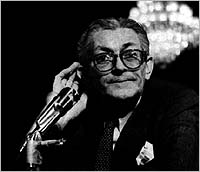
One of these men worked for a public
institution. The other is the head of
the Harvard Corporation.

"I'm sorry, sir, we can't accept that," the postal clerk said.
"Why not?" I asked.
"You have to write your name on the top," he said. "Can't accept packages without a name."
"Why not?" I said.
"Security measure. Can't accept packages without a name."
I thought about this for a moment.
"You think that someone who's sending a bomb through the mail is going to write his real name on the top?"
The clerk glowered. "Sir, that's not appropriate language to use in this facility."
I shrugged and asked him for a pen. After much fumbling, one was produced.
I wrote "John Smith" at the top left corner of my package.
The clerk took his pen back, and my package along with it.
And thus America rests safer.
About 20 minutes ago, they blew it up.
Yale students, smart kids that they are, held a contest to see how much of an earthquake the implosion would cause.
You will all remember the Coliseum, of course. Once upon a time it was an active attraction for New Haven and the Connecticut suburbs. Even before going to college, I saw the Police play there, the "Ghost in the Machine" tour, in 1981. The Go-Gos (the Go-Gos!) warmed up for them, and the crowd liked them so much, they were called back for an encore. I saw the J. Geils Band there in, I think, 1980. I saw U2 there, with opening act Marshall Crenshaw—they were playing "October" at that point. And I'm pretty sure I saw the Grateful Dead there, but my memory of Dead shows is hazy. Could have been New Haven....
In any event, the Coliseum couldn't really make a go of it, and truth to tell, it was a classic example of bad urban planning. Designed to draw people in from the suburbs, it worked—about once every two weeks. The rest of the time, it sat there, an empty, ominous hulk of a building not far from the New Haven Green. You wouldn't want to walk around it at night. It squashed the neighborhood like a massive brick that plunged from the sky.
And then it started falling apart—the upper level garages rusting out so badly that, rather than repair them, the city just gave up and closed them off.
Soon, the Coliseum was playing host to minor-league hockey and monster trucks.
Now they've blown it up. (I would have gotten up early to watch that.) The area will be redeveloped with new housing and retail, part of New Haven's ongoing renaissance. There will even be cobblestones. Drivers exiting off I-95 and I-91 won't have to pass by a building that looks like a really big mausoleum any more.
Still, there's a part of me that will miss the Coliseum. Just like there's a part of me that misses the Police, and Jerry Garcia, and being 17 years old, driving up to New Haven and hearing a rock concert, jumping up and down in my seat and cheering without a care in the world except having enough money to get some food and gas after the show....
Geek has always had negative connotations within society at large, where being described as a geek tends to be an insult. The term has recently become less condescending, or even a badge of honor, within particular fields and subcultures; this is particularly evident in the technical disciplines, where the term is now more of a compliment denoting extraordinary skill. There is an increasing number of people who self-identify with the term, even when they are nontechnical or do not fit the classic geek archetype.
Exactly.
So you see, my diction is not as unflattering as some of you have interpreted it to be. After all, I'm the guy who admits to downloading original Star Trek episodes from iTunes....
In a statement issued by her office in the wake of recent speculation, Richard affirmed “her deep and unequivocal commitment to the University of Cambridge and to completing the full term of her appointment, which ends in 2010”, a moderated version of last month’s statement which claimed that Richard “does not consider herself a candidate for the presidency of Harvard”.
[Blogger: Punctuation, British.]
Sounds like a stronger version of her earlier statement, no?
I don't think so. In many realms, such as Star Trek conventions and Linux chat rooms, geekiness is a point of pride. Look at Bill Gates. Huge geek. Massive geek. But obviously a brilliant man and a very, very skilled leader. Not to mention a really laudable humanitarian.
Now, is it an accurate (albeit reductive and extremely crude) description of Thomas Cech? Here are some photos of the Nobel Prize-winning scientist over the years. You decide—and ask yourself, would the Harvard community care?
Because, after all, not all cultures, whether corporate or academic, are equally geek-friendly. What works at Microsoft wouldn't work at Apple; what works at MIT wouldn't work at Harvard...

First Barack Obama gets a sweetheart deal from a Chicago political fixer. Now John Edwards is found to have sold his Georgetown mansion to a front company for two wealthy businessmen currently being investigated by the SEC. In a soft real estate market, Edwards sold the house for $5.2 million just four years after he paid $3.8 million for it. Edwards closed the deal the day before he announced his presidential candidacy; the shell corporation, used to hide the buyers' identities, was created just a few days before.
John Edwards is running as a populist outsider. This sleazy deal is one strike against that image. The second is his gig with the massive and secretive New York hedge fund, the Fortress Group.
I'm not saying that Democrats have to take a vow of poverty...but when will they realize that working with hedge funds compromises their ability to speak out on issues of economic justice?
The contention revolves around a speech Summers gave this week to the Organization for Surgery, Health, Infection and Treatment, in which he suggested that women may be "intrinsically better" than men at giving birth.
It's part of the newspaper's annual joke issue.
I am constantly amazed at how deep the memory of Summers' women-in-science gaffe runs. Almost invariably, when I tell new acquaintances that I wrote a book about Harvard and its former president, they say something like, "Oh, the one who thinks that women are stupid?". Or: "The one who thinks that women should stay home?".
Summers' remark on women-in-science has over time morphed into a much broader indictment of his views on women generally. It's now an avatar for general condemnations of sexism. Just listen to Martha Schwartz, the design school prof at Harvard who alleges discrimination in her department.
"The sexism is entrenched," Schwartz said. "What conclusions can you draw? The Larry Summers one would be that maybe women are not predispositioned to be landscape architects."
Fairly or not, Summers' women-in-science moment has become one of the defining episodes—maybe the defining episode—of his career.
When asked if he would ever consider leaving Duke to assume Harvard University's presidency, President Richard Brodhead had a simple response.
"What a foolish question," he wrote in an e-mail. "I already have a great job."
"What a foolish question." I know Brodhead has made some serious mistakes regarding the rape scandal—frankly, who could have handled it perfectly?—but I do like the guy. He's an eloquent man.
Meanwhile, the Crimson continues its series on presidential prospects with this piece by Stephanie Garlow on Thomas Cech, the president of the Howard Hughes Medical Institute.
(Incidentally, the Crimson calls him Thomas R. Cech, but it's impossible to tell whether that's because he uses his middle initial or whether it's because the Crimson includes everyone's middle initial—another reason why the paper should change that anachronistic and pompous policy. Does "Hanna H. Gray" use the H, or is that just the Crimson? What about "David R. Liu '94"? A newspaper's style policy should clarify rather than confuse; this one does the latter. Middle initials should be included when the subjects use them, or when there is another, well-known person with the same first name and surname. Otherwise, it's not only pointless, it's introducing an error, actually changing the person's name. Sorry—it's a pet peeve.)
There seems no doubt that Cech can run a science complex. But can he overcome his complete lack of Harvard connections? And the fact that he apparently owns only two suits?
Reading between the lines, Garlow's piece suggests that the Nobel Prize-winner is a bit of a science geek. (Which I use as a descriptive, but not judgmental, term.) Not a huge shock there, given his work.
Still...not to put too fine a point on it, but Harvard just had a geek as president, and there were some serious downsides to that. (Moreover, Derek Bok is showing that not being a geek—i.e., having social skills, being a good listener, being charming, and so on, can really boost one's leadership ability.)
But then, there are geeks who are socially inept and off-putting, and there are geeks who are kind of sweet and inspiring. Which kind is Cech? Is either really suitable? And will the university really experiment with a lab rat bred in the laboratories of Iowa's Grinnell College, U-Cal Berkeley, and MIT?
The suspense builds.....
I've lived in NY my whole life and I love the place, but the fact is, New York no longer matters. It is no longer the culture capital (that would be Los Angeles), the entrepreneurial capital (that's Silicon Valley), or even the food capital (San Francisco). Why, it's not even the city immigrants come to to make a start. But it is still the financial capital. Which is why it has been overrun with Wall Street types.
Los Angeles the capital of culture? The mind reels...but not necessarily because the proposition is wrong. Silicon Valley as center of entepreneurial capital? Sounds about right. San Francisco the capital of food? I'd argue with that. New York not the city immigrants come to? I'd argue with that too.
Out of all those statements, the one that seems most interesting to me is that New York is no longer the capital of culture. If so, it's because of the Web's impact on journalism and television and film's impact on literature. It's no coincidence that yesterday Time Inc. announced yet another round of layoffs at its magazines, even as it announced investments in its websites.
1) today's freshmen are increasingly politically engaged, and, as might be expected, increasingly take sides on issues. The percentage of freshmen identifying as "liberal" is the highest since 1975; the percentage identifying as conservative is the highest in the survey's 40-year history.
2) Students are increasingly supportive of gay rights, with 61 percent saying that "same sex couples should have the right to legal marital status," whatever that means. (Why not say "the right to get married"?) Broken down by political self-definition, 84% of liberals agree with that statement, but only 30% of conservatives.
3) Whether liberal or conservative, many students have deep ambivalence about affirmative action and believe it should be abolished—about 45% of liberals and 57% of conservatives.
4) A large and growing majority of students list "helping others who are in difficulty" as "essential" or "very important objectives." About 67% of all students say that; at all-black colleges, the percentage is even higher, about 77% of students.
The rest say they want to work on Wall Street. (Just kidding!)
5) The number of students who say they want to "influence social values"—i.e., change the world—is at its highest level in 12 years.
I don't find any of this particularly surprising—what with the war in Iraq, global warming, and the incompetence of the Bush presidency, it's to be expected that young people would get more engaged with the world. The survey doesn't break this down by socioeconomic status, but I'd be fascinated to know how political engagement varied with affluence....
It was a bit of a crazy house. We threw lots of parties; the refrigerator looked like a war zone; I don't think we cooked a single meal. Our furniture was...scarce. The bathrooms were entered at your own risk.
But the parties were great.
Ari, sadly, left to move to Los Angeles, where he would thrive, wed, and breed. Andrew would eventually buy a condo in a section of Adams Morgan which, he swore, was on the verge of becoming a hot neighborhood. It still is. Truth to tell, it was just as well; one grew tired of being woken up by the Pet Shop Boys every morning. (Although I do still have the cd that Andrew got them to autograph for me when he interviewed them. The funny part is, he wanted one for himself as well, but he was so embarrassed about it that he actually got them to autograph two for me....)
David, meanwhile, loved writing for the Post and was a dogged reporter; he broke the story that, while in prison, Marion Barry, former mayor and on-and-off crackhead, had hired a prostitute to fellate him during visiting hours. In Washington, publishing that story took some guts. But David loved his work. Every morning, he would put on a suit—we used to tease him slightly about this—grab his briefcase—we would tease him about that too—and go off to work. He was a company man in the best sense of the word, passionate about reporting and the daily work of a newspaper.
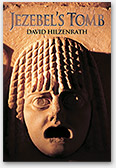
Looking at the Washington Post website today, I see that David has written a novel, Jezebel's Tomb, which the Post is serializing on its website. Fantastic. It's wonderful to see an old friend continuing to grow and challenge himself professionally. The book sounds like a good read—check it out.
That said....
I would wager that the percentage of their money which people worth over, say, $10,000,000 give away is significantly smaller than the percentage contributed by people making, say, under $100,000. Let's be real, here: While some of these folks are generous, they're not usually digging deep into their pockets.
I know a lot of investment bankers, and they all will tell you that they chose the profession for the money. (Some—not many—have an intellectual interest in it.) I have never met anyone who went into investment banking because he wanted to help other people.
So the social benefits of investment banking are entirely incidental to most of the people who practice it. As opposed to, say, doctors, teachers, social workers, members of the clergy, some lawyers, etc.
(In fairness, I must say this is increasingly true in the world of journalism; the inspiration of Woodward and Bernstein has waned, while the hope to work for US magazine and get on VH1 now seems journalism's great motivator.)
As a result, many investment bankers are as likely to do social ill as social good—as likely, say, to shut down a business as to build one. Because personal wealth is the prime motivator.
Moreover, there's no question that the culture of wealth they have created, particularly here in New York, is shallow, tedious, and self-absorbed. It's absolutely true that New York City benefits from the taxes paid by investment banks and their employees. At the same time, this has become a less interesting, less diverse city because of the legions of twenty- and thirty-somethings who make millions and spend it on penthouse apartments, $1,000 bottles of vodka at silly clubs in the Meatpacking District, Ferrarris, and lap dances. (Investment bankers have ruined the Meatpacking District.)
I also think that the lure of these millions is having a profound and unfortunate effect upon younger people. It is the case that many professions are losing talented young people—even well-paying professions such as business and medicine—because they simply can't pay what investment banks pay.
A friend of mine, a lawyer who is in her mid-30s and makes over a million dollars a year, said to me the other day, "I can't believe I work so hard and make so little money. I don't know why I didn't just go into investment banking."
This is a woman who could probably retire now, if she had to. But hers is not an uncommon sentiment. The rich are getting richer in this country—there's plenty of evidence to show the growing inequity of wealth in the United States. And instead of trying to do something about that, more and more young people just want to hop on board the gravy train.
So it was unfair to say that finance has no social value—of course it does. But the downsides are significant.
Of course, now that the media has built him up, it will now proceed to nibble away at him. E.g.: In the Boston Globe, Joan Vennocchi points out that, though often compared to JFK, Barack Obama is no JFK.
I'm not ready to climb aboard the Obama bandwagon. New is nice, but in perilous times, new is not enough. Neither is hope, the other underpinning of Obama's nascent presidential campaign.While Obama has a good model to follow, he has a way to go before he deserves billing as the next JFK.
And thus is conventional wisdom made.
Of course, Barama has never compared himself to JFK—not that I know of, anyway—and seems too modest a person ever to do that. Wouldn't it be nice if we could drop the JFK paradigm—come on, Boomers, let it go—and consider the man on his own terms?
That's Carter Braxton Worth, to you.
The short write-up included a paragraph unlike any I've seen before in one of these marital notices.
The bridegroom is a descendant of William Brewster, a religious leader of Plymouth Colony; of Carter Braxton, a signer of the Declaration of Independence; and of Chief Justice John Marshall.
Holy cow! This guy's got more bloodlines than Count Dracula!
So what does this descendant of greats, named after a signer of the Declaration—who takes his lineage so seriously that he includes it on the form you send to the Times in the hopes they will pick you for inclusion—do with himself?
Mr. Worth, 40, is the chief market technician at Oppenheimer & Company, the investment bank in New York....
Sigh.
I don't think I'll ever understand the mentality that says, "I'm a noteworthy person because of what my ancestors did," but at the same time, chooses a career without any social value whatsoever.....
They started dating at Harvard....but only after Whitney dated Mandel's roommate first.
“I was sad and shy and not exactly sure what one is supposed to do,” Mr. Mandel, also 36, said. Over their first summer break he sent her newsletters and mix tapes. But she didn’t get the message.
During winter break in their sophomore year he invited her to a New Year’s Eve party at his parents’ apartment in New York, which he gave solely to see her. As she left the party, he handed her a puzzling gift. “It was the screenplay of ‘The War of the Roses,’ inscribed ‘To my own Barbara Rose, who can hit me without hurting me and hurt me without hitting me,’ ” she recalled.
Smooth move, David!
Eventually, Mandel confessed his love.
As Dr. Whitney remembered it, “Dave said we either had to marry each other or never speak again.” She panicked, telling him she preferred to take things slow and stay friends.
Ah...the impulsive, all-or-nothing ultimatum, followed by the inevitable panic...a classic story.
He gave her the silent treatment, for the next four years.
Well, of course. What else would one do?
In New York after graduation, they bumped into each other at Gray's Papaya on 72nd and Broadway, which recently raised its prices. Pretty soon, they had a fight over what had happened in college. Mandel finally did the smart thing: he kissed her.
It was their first kiss, and, Dr. Whitney said, “it meant everything.”
The next day he left for California.
Oh, ambition! Mandel had been hired to write for Seinfeld.
They began a long-distance relationship, but soon he was working around the clock. Within a year they had broken it off.
So Mandel did what all somewhat immature ex-boyfriends do: He humiliated Whitney by writing an episode of Seinfeld about her. A very funny episode of Seinfeld, you will recall, in which Jerry starts dating a woman with "man-hands."
Whitney...winces when he mentions it.....
(It's not online, but the print edition of the paper—sneaky!—runs a close-up of Whitney's left hand. It lives up to advance billing. On the other hand, that's a big rock!)
Nonetheless, while at med school at Tulane, Whitney found that she missed Mandel, despite the fact that he had some issues.
He lives in a dark Los Angeles apartment with blackout shades covering all of the windows to protect his collection of comic books, toy robots and “Star Wars” stormtrooper helmets.
The course of true love—it's not smooth!
“If I could have found any way to live happily without him, I would have done it,” she said.
In some ways, one thinks that she should have tried just a bit harder.
When Whitney moved to LA to do her residency, they got back together (again!) and, after a series of fights—love not smooth, etc.—they got married. To their credit, the band played the Beach Boys' "God Only Knows," which is an excellent choice. (The greatest pop song ever written? I leave that to you to decide.)
These two are either going to divorce in a year or have one of the great marriages in the history of the Sunday Styles section. I hope it's the latter. Congratulations, Rebecca and David!
Richard is, according to the Crimson, on the short list for Harvard's top job.
Several Yale provosts have left New Haven to run other leading universities in recent years. Richard’s predecessor, Judith Rodin, served as president of the University of Pennsylvania from 1994 until 2004. Susan Hockfield, Richard’s successor, now heads the Massachusetts Institute of Technology. In addition, Richard Brodhead ’68 became president of Duke University in 2004 after 11 years as dean of Yale College.
But here's more suggestion that many top candidates don't want the Harvard job.
Friends say she is having more fun at Cambridge than she ever would at Harvard. Anthropology professor Richard Burger said he thinks Richard is enjoying leading her alma mater and the near-celebrity status that goes with the job. After a minor collision with a cow while biking to work one day, Richard was surprised to see an article about the incident in The Times of London, Burger said.
Richard might just be too good for Harvard, Burger said.
“They don’t really deserve Alison,” he said.
More fun at Cambridge than she ever would at Harvard...that's a hard thing to quantify, of course, but I think there's something to that idea. People still want to have fun in their jobs, at least some of the time, and Harvard's been a pretty joyless place lately. Moreover, its campus culture is resistant to fun, from top to bottom.Whoever Harvard's next president is, she or he should try to change that.
_____________________________________________________________
P.S. By the way, I have no idea if Elena Kagan's decision to sign a letter of protest against the Bush administration will help or hurt her presidential chances, or neither, but good for her for signing it. (Though to be sure, it's something of a no-brainer, and would have been more news if she hadn't signed it than if she did.)
Aide Says U.S. Won't Yield 2 to Iraq to Hang without a Plan
—The New York Times, January 15, 2024
Apparently the plan was to decapitate Saddam Hussein's half-brother Barzan Ibrahim al-Tikriti.
Which begs the morbid question: What would we ever send 20,000 more troops and hundreds of millions of additional dollars to prop up a government so incompetent, it can't even manage an execution—twice?
Some science advocates outside Harvard have their fingers crossed for one of their own because they believe a scientist would be best positioned to fulfill the university's potential. In an era in which science is rapidly expanding human knowledge, Harvard's priorities will set an example for universities across the country and even the globe.
But others take a counterintuitive view.....
Zzzzzzzzz.
There's no news in this piece, which goes to show that sometimes, even the M-Bomb drops a dud.
—Colorado senator Wayne Allard, who had promised to serve only two terms, announcing his retirement at the end of his second term
The relationship fell apart, Cross writes, but not because she thought her boyfriend was a bad guy; rather, he was so psychologically devastated by the experience that he could no longer experience desire without also feeling guilt and fear.
Rather than go to a trial in which anything could happen, the man in question accepts a plea bargain (according to Lewis, one count of indecent assault and battery) and receives 18 months of house arrest. He must wear an electronic bracelet. If he ventures back into Massachusetts, he must register as a sex offender.
Before his plea bargain, he was asked to submit to an evaluation process that was particularly distressing: he was shown lewd images of various kinds, including those of prepubescent girls, with his state of arousal at each image being measured, judged, dissected.
The evaluation determined that he was not a likely sexual predator, but he still faced rehabilitation as part of his sentence. These sessions, of which he spoke very little, clearly were intended to positively influence how he treated others. But the reality was somewhat more complicated.
Already he felt the shame of the charge and conviction. With the sexual evaluations, he was forced to question the normalcy of his impulses. Now the rehabilitation extinguished the remaining spark he had left, the irreverence I’d originally fallen in love with, replacing it with a generic “respect” for others that in reality was a kind of bland and suffocating politeness.
Nicely written, Ms. Cross, with shades of Orwell and Kubrick. "His state of arousal at each image being measured, judged, dissected." And who was doing the judging, I wonder?At the end of the story, Cross breaks up with her boyfriend because, she feels, his spirit has been broken. When he receives an invitation to talk about his experience on a television show, he declines, to Cross' disappointment.
He refused, saying, “I just want it to be over.” He didn’t want to give ammunition to groups targeting him as the preppy rapist. He didn’t want his televised face to be connected with the night he suddenly became known as a monster.
Yet what alarmed me was not some sinister side of him I never saw but a passivity and retreat that I saw far too much of. In the end, I found it harder to love an emasculated boyfriend than one accused of rape.
But was her boyfriend's choice passivity...or wisdom?Because here comes Gawker—of course—mocking Cross, saying that " lasting bliss with her rapey bf was not to be," and adding, We totally understand Ashley's point of view: a rape conviction can sort of impede a relationship, sure -- but bad sex? That's a dealbreaker.
First off, of course, the man in question wasn't convicted of rape. Second, Gawker seems to think that this is a cut-and-dried matter, though neither in Cross' piece nor in Lewis' book does that appear the case.
All told, you can't really blame the guy for not going public. Both Gawker and Steve Gilliard's blog have details of the case, naming the accused. (To be sure, the account here doesn't make this guy look good, but then, it would appear to be only the woman's side of the story, and even that raises questions.)
Which brings one back to Duke. If that's what an accusation of date rape did to a guy—with virtually no publicity, certainly not national headlines day after day—how will the Duke three be affected by their ordeal?
Meanwhile, here's one of the more obvious headlines you'll see in some time: "Duke Case May Hurt Prosecutor's Career," an AP story running in the Times. Truth is, Nifong will be lucky if he's arguing parking tickets in traffic court after this.
Meanwhile, the evidence that the accuser is lying grows greater and greater. When will the mainstream media print her name? Of course, you can never prove that something didn't happen, but this is about as close as you can come. If you can't print the name of this false accuser, whose name could you print?
Other than, of course, those of falsely accused victims.....
Yesterday, Harvard released its grand master plan for Allston. A few things strike me as notable: the inclusion of undergraduate housing; the environmental sensitivity; the addition of new "open space on land currently covered by asphalt" (although the phrase is vague); and the apparent support of Mayor Tom Menino.
"This plan offers tremendous opportunities for Boston. Over the next two decades, Harvard will become a major presence in our city," said Mayor Thomas M. Menino. "It will not only enhance the Allston neighborhood, but it will strengthen Boston's reputation as a world center for life sciences, create thousands of new jobs, and provide opportunities for new collaborations between Harvard and the community."
In other words, Menino's firmly on board. That will make life much easier for Harvard.
On the page linked to above, check out the links for the aerial view of Allston as it is today and Allston as Harvard planners envision it.
The first thing you realize is that Harvard is blessed that Allston is currently such a dump. What an ugly place! (Sorry, Allston residents, but it's true.) You could doodle on a pad for five minutes and come up with something better than what currently exists.
The second most noticeable aspect is that a section of Storrow Drive has suddenly gone...underground. Well, why not? It's a shame that that side of the river is so cut off from the water. But the severity of the transition looks a little odd—and why not extend that grass overpass east and west, to both bridges, which would look much better?
Also, this would appear to be the great bulk of the new "open space," because there sure isn't much anywhere else. Since it's all between Harvard campus and the river, is this essentially private park land, funcionally privatizing a large section of the river? And what's with the bizarre line of trees, breaking what should be a lovely view of the river, and chopping what should be relatively uninterrupted grass into aggressive, strangely angled sections? You folks already did this with the Yard, and it didn't work there either.
A third thing is that the new plan greatly increases the density of development in Allston, which would obviously add to the traffic across the river going both ways. But other than some discussion of shuttle buses and better bike lanes (good luck with that in February), there's no bold suggestion for how to deal with the increased traffic—no new bridge, for example, no monorail. That seems a problem. These bridges are a nightmare as is.
Fourth, that new building on the Allston side towards Boston, the one that looks something like a cement bench, is ugly now, and will still be ugly in 50 years.
Fifth, the new undergraduate houses, wherever they may be, don't appear to be in the Georgian style—there doesn't seem to be any new Georgian architecture on the Allston side—and they may not even be on the river, unless they're to the east of the business school. In which case, boy, are they ugly. In fact, a lot of this architecture—and I know it's early—looks deeply uninspired and generic.
Six, looks to me like some athletic facilities just disappeared...hmmm. We know Bok isn't a big athletic booster. Is this part of a long-term anti-athetics conspiracy?
Huh. Now that I think about it, it seems this conversation needs to broaden. Harvard undergrads, athletes, and alums, as well as Allston residents, need to get involved....
Because Harvard's plan essentially privatizes an entire neighborhood, and to the untrained eye—mine—there are some real questions here.
________________________________________________________
P.S. The Globe runs with an artist's rendering showing Allston looking towards Cambridge, which gives the appearance of much more open space—and makes the Storrow Drive overpass far less noticeable—than the view looking toward Allston from Cambridge.
Okay, I'm writing about the Crimson editorial blasting the faculty for blowing off their January meeting.
I'm not sure that skipping one meeting in dreary January—let's hope the faculty is off scuba-diving, where I ought to be—makes the Crimson's case. But the paper certainly raises a worthwhile question. After Summers' ouster, there was much talk of regaining momentum, increased faculty devotion and commitment to matters of teaching and governance, and so on.
Are the faculty living up to their promises? Or, now that Summers is gone, are they sitting back fat and happy, like a cat that just swallowed a mouse?
"If people feel discomfort, maybe they should consider a suppository."
—Couric, speaking about her CBS evening news broadcast, in the New York Observer
And just in case you had any illusions about Congress....
"Toyota is so profitable and has plants in so many states that, frankly, they've got more congressmen and senators than General Motors does."
—GM vice-chairman Robert A. Lutz in the Times
Thanks to the insatiable desire of the American media to create controversy where there is none, or—more appropriately, in this case—drag a year-old controversy, kicking and screaming, into a year in which it should be water under the bridge, Harvard’s presidential search is irrevocably tainted. The specter of President Summers’ perceived shortcomings and his ouster will likely have far-reaching consequences once the president is selected, and beyond.
Create controversy? The media? Now, that wounds. After all, it's not as if Larry Summers didn't give us some pretty good material. And we're not the people who voted no-confidence in him.
And so, it seems, the House of Harvard must remain inescapably haunted by the Ghost of Summers, with no hope of exorcism in sight.
Yes! It must!
In all seriousness, Lattimore has a point that the Summers experience "haunts" the current presidential search, but she's wrong to think that this is a media creation. For one thing, the man himself hasn't exactly disappeared, and he'll return full-time in September. Moreover, of course the ouster of a contentious president with a divisive leadership personality affects the search committee's thinking. It should. Now, surely there's a balance to strike between looking backward and looking forward, but there's a real-world aspect to this: the faculty ousted Summers, and the faculty isn't going to love the idea of a new president who resembles Summers in some way or has close ties to the former president. That's not a media invention.
In other news, Bartley's dropped its Larry Summers burger. (You know—the one that gave you indigestion for years after you ate it? The only hamburger that ordered you?)
[Bill] Bartley, who names burgers along with his wife and father, said the burger was cut only because Summers had stopped making headlines.
“He’s done. No más. Not interesting,” Bartley said.
Somehow, I doubt that.
“In the wake of media speculation, [Richard] reaffirms her deep and unequivocal commitment to the University of Cambridge and to completing the full term of her appointment, which ends in 2010,” the statement said. That marks a change from last month, when Richard’s office released a less definitively worded statement saying that she “does not consider herself a candidate for the presidency of Harvard.”
Given that Stanford's John Etchemendy has twice said that he is not interested in the Harvard job, we are left with Drew Faust and Elena Kagan.
I raised the issue a couple of days ago: What if potential candidates for the Harvard presidency who issue statements of non-interest actually mean it? Has the Harvard presidency lost its luster? And if so, does the ouster of Lawrence Summers have something to do with that fall from grace, or are there other factors in play?
Richard's exit raises another possibility: that whoever lands the presidency will be saddled with the perception that she (it certainly looks like a she, at this point) was chosen only after the most qualified outsiders all said no.....
So, folks, which should it be: Drew Faust or Elena Kagan?
I'm not promoting anyone—not that anyone would care if I did—but I continue to think that Faust's good relationship with much of FAS gives her an edge, while Kagan's bond with Larry Summers doesn't do her any favors.....
____________________________________________________________
P.S. The M-Bomb has a short list of her own, and it differs slightly from the Crimson's.
The Harvard insiders on the short list are the provost, Steven E. Hyman, a neuroscientist; the dean of the law school, Elena Kagan; and the dean of the Radcliffe Institute for Advanced Study, Drew Gilpin Faust.
Another top contender is Thomas R. Cech, a 1989 Nobel Prize recipient in chemistry who is president of the multi billion dollar Howard Hughes Medical Institute, one of the top philanthropies and research organizations in the world.
And here's another sign that perhaps Harvard's top job has lost some of its luster:Harvard also has asked the president of Tufts University, Lawrence S. Bacow, to be interviewed, but he refused.
The president of Tufts stiffs Harvard.... Ouch.
John Etchemendy continues his string of denials: "I'm quite convinced that there are stronger and far more appropriate candidates for this position," he said. "Stanford is my university, and I don't intend to leave."
One wishes that Etchemendy would just come out and say, "I don't want the job, and if offered it, I would not accept it." Because there's still some wiggle room in his statements.
And here is a final interesting tidbit—an important one, I'd say—from the M-Bomb:
[Thomas] Cech's organization, Howard Hughes, is a wealthy behemoth that funds many of the biggest stars in scientific research. Its trustees include prominent members of the Harvard community, including Hanna H. Gray, a former Harvard Corporation member who championed Summers as president, and Jeremy R. Knowles, a powerful Harvard dean.
Hanna Gray and Jeremy Knowles? That's a powerful combo. Gray, of course, was the driving force in the choice of Summers, so that doesn't exactly give her credibility. But Knowles is savvy and influential, and if he was touting Cech, one would have to think that would make a difference.....
So it's hard not to sound petty (I've already admitted to jealousy) when suggesting some doubts about Gladwell. And in the interest of full disclosure, I should add that I know Malcolm very slightly, and think he's a fine and gifted person. The world of journalism is definitely better off for his presence.
But...Blink? A deeply flawed book which takes about 100 pages to make one argument, then for the rest of the book completely contradicts itself. The journalism feeling increasingly contrived and, frankly, near self-parodic? (The dog whisperer? The hit-makers?) The dubious self-deprecation, like this line from his website: My great claim to fame is that I'm from the town where they invented the BlackBerry.... The image-shaping haircut? The concern that much of the journalism is really just a marketing vehicle for his immensely lucrative speechifying to corporate America? That the buck-raking drives the journalism, rather than the other way around?
I enjoy Gladwell's writing, but I've always been slightly mystified by its popularity. Gladwell, it seems to me, has perfected the art of writing stuff that is just smart enough—which is to say, it makes the people who read it feel smart, without really challenging their intelligence. I'm not joking when I say that that is a real talent. But the downside is that you can only go to that well so many times. After a point, his approach starts to feel like a computer program: If most people feel x, but don't really think about it, then I write y....
Now Gladwell has written a "semi-defense of Enron"—a phrase that is perhaps too clever—and he's taking some heat for it. Joe Nocera, a very smart business writer, considers Gladwell's suggestion that Enron's collapse was not so much a matter of illegality, but of Wall Street analysists who didn't read the fine print—and finds it unconvincing.
Nocera writes:
The point is not the sheer volume of disclosure; it’s whether disclosure illuminates or obfuscates. Enron usually did the latter. In effect, Mr. Gladwell has conflated fraud with overvaluation. ...You could find plenty of evidence of overstated earnings in Enron’s financial documents — but you’d never know that the company was a Potemkin village. The kind of information that would have led to such a conclusion was precisely the information Enron hid from investors.
Nocera goes on to show that Gladwell supports his thesis by taking one study clearly out of context in a way that is either amateurish or deliberate.
From my read, it's a devasting piece. On his blog, Gladwell has not yet responded.
Yours truly in 02138's premier issue, September 2006
In a marked change from the presidential search of 2000-2001, the committee has decided this time to place a greater emphasis on vetting candidates in the final stages of the search, according to three sources who have spoken with committee members. The committee members feel the '00-'01 search panel spent too much time whittling down the list of candidates and not enough time vetting the final few, the three individuals said.
The Harvard Crimson, January 9, 2024
Come on, guys—it's not news if someone else reported it three months ago....
The Times reports on a number of university presidents who have come under fire in recent years. "The most celebrated case involved Lawrence H. Summers.... Circumstances vary, but the overthrow of Dr. Summers may have been contagious."
In the classic style of British journalism, The Independent's David Usborne has rewritten articles from the Times and the Crimson (at least he gives them credit) to produce "Woman May Lead Harvard After Sexism Controversy."
Here we see where the Times' mistake of focusing on the wrong women matters:
Candidates on a shortlist now before Harvard's presidential search committee are believed to include at least three women presidents at other Ivy League universities: Shirley Tilghman of Princeton, Ruth Simmons of Brown and Amy Gutmann of the University of Pennsylvania. Also being mentioned is Alison Richard, presently vice-chancellor of the University of Cambridge.
(That Times story was reprinted in the South China Morning Post and the International Herald Tribune, incidentally.)
Meanwhile, a letter writer to the American Spectator [Blogger: apparently the American Spectator still exists] notes, "There are still some disputation zones where political correctness dictates that one ought to keep one's mouth shut about known differences. It is unfortunate for Harvard that Lawrence Summers didn't have handlers to edit his statements."
About which one must say two things: Lawrence Summers, of course, did have handlers to edit his statements. (Imagine what might have happened if he hadn't.) And two...disputation zones?
And speaking of Larry Summers, in April 2005 the president got some much-needed good ink for pledging to divest from companies supporting the genocide in Darfur. Whoops! Following up on the Crimson, InsideHigherEd.com reports that never quite happened. (I'm shocked, of course.)
After receiving much praise for taking an ethical stand to sell off stocks in companies that may support genocide in Darfur, Harvard University finds itself accused of continuing to profit from investments in that region of Sudan.
It's almost enough to make you think that Summers was just trying to generate some positive press without bothering to follow through.....
And finally, Elizabeth Green on USNews.com seconds the point raised here earlier: What if no one really wanted to be president of Harvard? Her short piece is called, "Newspapers Agree: Harvard Might Want a Woman. But Does a Woman Want Harvard?"
Javier Hernandez and Daniel Shuker report that the presidential search committee has narrowed its choices to the following: John Etchemendy, Drew Faust, Elena Kagan, and Alison Richard. (The reporters qualify that group by adding that "a dark horse candidate could still yet [sic] emerge.")
First off, what to make of the fact that Etchemendy has expressed his lack of interest in the job? You can parse his words—see item below—for wiggle room, but when he calls his current position "the best job in higher education," that's pretty tough to back away from.
Alison Richard, by contrast, has said that she remains "deeply committed" to the vice-chancellorship of Cambridge, but that's a nothing statement.
In any case, according to the Crimson, "sources close to the committee have said that the group is not paying attention to candidates' publicly stated interest or disinterest in the presidency.
Here's another interesting tidbit:
While many informed observers have long considered Kagan a leading candidate for the presidency, the two sources said that some members of the committee currently view her as a relatively weaker contender compared with other candidates.
One wonders if the search committee has said to Kagan, "You're sitting in your office and the phone rings. It's Larry Summers, the man who appointed you the first female dean of the Harvard Law School, your old colleague from the Clinton administration. Summers wants a favor. What do you do?"
The choice of anyone other than Kagan would surely diminish Larry Summers' influence in Mass Hall come September, when he returns to 02138...
My picks, in order of likelihood:
1) Drew Faust
2) Alison Richard (a very close second...but does she have Harvard ties? Don't think so.)
3) Elena Kagan
4) John Etchemendy
Firemen caught six of the pythons—one of which was about 25 feet long—but the rest apparently escaped.
The local constabulary warned children not to walk near storm drains any time soon.....

Malaysian firemen handling the snakes pulled from the drain.
He said in September, “It is flattering that my name is mentioned in connection with the Harvard presidency, but I have no intention or desire to leave my current position, which I believe is the best position in higher education."
(Shirley Tilghman said that the Princeton presidency was "the best job in higher education." Well...who's right?)
Today he tells the Stanford Daily, "“My feelings haven’t changed. All I will add is that I’m sure there are equally qualified and much more appropriate candidates for the position.”
Etchemendy joins a fairly long list of people who have adamantly said that they do not want the Harvard job: Amy Gutmann, Ruth Simmons, Shirley Tilghman, Mary Sue Coleman of the University of Michigan....
Hmmm.
Maybe the real story here isn't who the next Harvard president will be—but why so many people are saying no to Harvard....
The conventional wisdom is, they don't mean it. But what are the implications for Harvard—and about Harvard—if they do?

Shot with a Motorola cell phone while driving south on 1-84
towards Hartford.
This morning the Times runs a piece about whether Harvard will choose a woman for its next president. Then Matt Drudge links to it. Then the New York Sun runs a piece saying, "Harvard could be preparing to select a woman as its new president, according to a post on www.drudgereport.com."
According to a post on www.drudgereport.com? Hmmm...seems to me you should credit the newspaper which actually ran the story, not the website that happened to link to it.
In any case, now suddenly you have a media mini-blitz about Harvard choosing a female president. Even the Crimson gets into it, with this story: Woman to Take the Lead?
Now, about the Times piece, by Alan Finder. It contains absolutely no news. It reports on the Crimson's disclosure of the list of 30. It says that maybe an insider will be chosen. It says that some freshmen care, some don't.
And it contains provocative quotes like this one: “I wouldn’t be surprised if the new president is a woman,” Dr. Maguire added. “It’s just time. There are lots of good women around.”
And I wouldn't be surprised if the Giants lost to the Eagles in the last second of the game. Or if the sun came up tomorrow. Some things, you're just willing to go out on a limb about.
This isn't to take too much of a shot at Alan Finder; the article's a perfectly good one for anyone who hasn't been paying attention to the Harvard search, which is most of the world. Still, one wishes that he did advance the ball just a little.
It is also slightly weird that the paper publishes photos of the two women, Ruth Simmons and Amy Gutmann, who have most decisively removed themselves from consideration. How about Drew Faust, Elena Kagan, or Alison Richard? Nowhere to be seen.
And the Times wonders why its audience is slipping.....
The hunts are notoriously brutal, and blue tarpaulin sheets block the main viewing spots overlooking the cove where the killings take place, to prevent photographs being taken. Beyond the cove, small boats surround a pod of migrating dolphins, lower metal poles into the sea and bang them to frighten the animals and disrupt their sonar. Once the panicking, thrashing dolphins are herded into the narrow cove, the fishermen attack them with knives, turning the sea red before dragging them to a harbourside warehouse for slaughter.
....Restaurants and shops offer dolphin and whale sashimi and humpback bacon, along with tuna and shark fin soup.
If you're as appalled by this as I am, drop the Japanese consulate a note, at [email protected].
No, really.
And you thought dolphins were always warm and fuzzy.....
Even in modern society, women and men have not had equal opportunities to prove their competency as leaders. Therefore, Harvard, as a progressive institution, should give the politically underrepresented sex—women—a chance to do so.
(Blogger: Harvard is a progressive institution?)
...A woman....would be the only candidate who had faced and overcome the obstacles that modern sexism presents: those that half of Harvard’s student body will likely face.
Hmmm. Seems to me there's an argument for a female president, but it isn't the one that Lescroart makes. It has to do, I think, with what type of leader Harvard needs after the Summers years, what kind of figure can best continue the process of recovery initiated under Derek Bok, can signify Harvard's decision to change and modernize and, hopefully, loosen up. This is really more about personality type than gender, but I suppose it's possible that you might find more women who embody the type than men. (Not, I hasten to add, for genetic reasons.)
Lescroart continues: Wherever possible, Harvard should use its celebrity status to combat discrimination and unequal opportunities. The choice to select a woman for its traditionally male, high-profile presidency would be a real and impressive step.
This is probably the worst possible argument for choosing a woman: That Harvard should use its choice of president to effect political and social change. Nonsense. And in any case, there are plenty of female university presidents out there who are showing that women are perfectly capable of being excellent university leaders. (Lescroart makes a common mistake: If it isn't happening at Harvard, apparently, it isn't happening.)
Harvard should choose its president based on who would be the best president. It may well be that that person is female. But choosing a woman as president to help right social wrongs? That doesn't do anyone any favors.
To that end, the Yankees just traded away free agent pitcher Randy Johnson, one of baseball's most unpleasant men, after signing him just two seasons ago. They sent Johnson back to Arizona, the team from which he came. And a few weeks back, they jettisoned Gary Sheffield, a daunting hitter who is also one of the most unpleasant men in baseball.
Johnson was a Steinbrenner mandate; after the Diamondbacks beat the Yanks in the 2001 World Series, Steinbrenner was obsessed with signing the snarling lefthander. Though Johnson won 34 games in two years, he really never pitched very well, or very consistently, and his ERA last season was 5.00. And by all accounts he was a deeply obnoxious presence on the team.
But, alas, not all the moves the Yankees want to make are so encouraging: The Times says the Yankees still want to sign Roger Clemens, who only wants to play half a season. Ugh. Nothing seems more antithetical to the concept of building a team.....

Was it because they were being chased by a marauding great white shark?
Defoe is also the author of The Pirates! In an Adventure with Ahab and The Pirates! In an Adventure with Scientists. (A-ha! I see a theme.) I'd never heard of these funny little books until I came across them at a book store in my neighborhood, Ivy's, which I only recently began patronizing. I saw the books laid out on a table at the front and thought they might be a suitable present for my precocious seven-year-old nephew, but after flipping through the pages and finding them hilarious but a bit racy, wound up buying them for myself. I rarely buy books on the spur of the moment, but there was something about the environment that prompted me to do so this time; the store's selection seemed so smart, I trusted its proprietors. Plus, I liked the dog, Gus, who slept near the cash register and briefly lifted his head to sniff the scone that I was carrying in a paper sack. Every bookstore should have a sleeping dog willing to lift his head and sniff you hello before going back to sleep.
About a week after that, I read in the Times that Ivy's, along with its darker half, Murder Ink, was closing its doors, no longer able to afford a staggering $18,000 monthly rent for a space smaller than my apartment (which is pretty small). The owner, Jay Pearsall, wrote a lovely essay to explain his decision.
Every now and then I comb our apartment shelves for books that I can add to the inventory at the stores. Recently, when I grabbed a copy of ''The Plot Against America'' by Philip Roth, I noticed one of my scribbled notes sticking out of it: ''Every night, just before I leave the store, I take a seat on one of the rolling library stools and reflect on what a great place this is and how I won't have it much longer.'' There's also written on the slip, in quotation marks (from the Roth book?): ''One can only do so much to control one's life.''
Owning a book store, Pearsall said, was his dream job for 17 years. How many young people today will grow up to harbor such a lovely thought? And how many will look at Wall Street bonuses in the millions and lust for the soullessness of meaningless wealth?
Today the Times reports that another small bookstore, Micawber Books, in Princeton, New Jersey, is biting the dust.
“The driving force of all of this is the acceleration of our culture,” [owner Logan] Fox said. “The old days of browsing, the old days of a person coming in for three or four hours on a Saturday and slowly meandering, making a small pile of books, being very selective, coming away with six or seven gems they wanted, are pretty much over."
It's hard not to feel deeply conflicted about this. I love much about our accelerated culture—I am addicted to wireless internet access, I think cell phones are great, I spend a decent amount of money at Starbucks, I think it's cool that you can now download the entire first season of Star Trek from iTunes—but one needs charm and intimacy and slowness as well as speed and access and efficiency.
Recently the Tower Records on Broadway closed. I felt no sorrow about that departure. Tower was a cold, overpriced store, which combined the worst of the chain bookstore—impersonal selection, hapless help—and the worst (high prices) of the independents. Plus, it's hard to feel an emotional bond with a compact disc. If your medium is about efficiency and ease of storage, digital downloads are the way to go.
My feelings about Tower were only further vindicated when it promised massive savings on its remaining stock—40% off!—and then jacked up the prices on every cd to $18.99, so that you were still paying more than an album costs on iTunes. Sneaky, sneaky, sneaky.
But bookstores are another matter. I'm no Barnes and Noble-hater—in Manhattan, there are some pretty good ones—but it's never going to be a charming place, and I don't stumble across unexpected finds there that I'll buy on the spur of the moment.
Truth is, I love The Pirates! In an Adventure with Communists!, and in a couple of years, when he's old enough to know what a communist is, I'll pass it along to my seven-year-old nephew. I'll be sure to tell him where it came from.
It includes:
1) the death of Steve Irwin
2) the death of Peter Benchley
3) the death of 23 to 73 million sharks per year, killed by the international shark trade, which goes to feed the Asian myth that shark fins are aphrodisiacs.
4) the first-ever video of a live giant squid
The oceans are in crisis; we must do better by them in 2007.
Referring to the obsession with Iraq, Clarke writes:
National Security Council veteran Rand Beers has called this the "7-year-old's soccer syndrome" -- just like little kids playing soccer, everyone forgets their particular positions and responsibilities and runs like a herd after the ball.
Here are the issues that Clarke wishes the White House would pay more attention to:
1) Al Qaeda and the struggle against radical Islam
2) global warming
3) Russian revanchism
4) Latin America's turn to the left
5) Africa at war
6) An arms-control freeze
7) Transnational crime
8) The Pakistan-Afghan border
Clarke's conclusion:
As the president contemplates sending even more U.S. forces into the Iraqi sinkhole, he should consider not only the thousands of fatalities, the tens of thousands of casualties and the hundreds of billions of dollars already lost. He must also weigh the opportunity cost of taking his national security barons off all the other critical problems they should be addressing -- problems whose windows of opportunity are slamming shut, unheard over the wail of Baghdad sirens.
Clarke is discussingly only national security issues. I would add to that list...
1) the growing inequality of wealth both within the United States and around the world
2) the tension between America as a traditionally isolationist nation and the changes effected upon it by globalization
3) an educational system that does not seem to be preparing our children for a globalized world
4) the loss of a meaningful spiritual counter to the onrushing materialism and cultural degradation of American life
It's a long list. The fiasco in Iraq has set us back immeasurably far, and history may well record the Bush years as the time in which this nation lost its confidence and its singular place in the roster of nations.
The deaths of James Brown, Gerald Ford and Saddam Hussein close 2006 on an odd and slightly unpleasant note; I was struck by this Washington Post piece on how many Washingtonians, including the President and House speaker Nancy Pelosi, blew off Ford's funeral. Tacky. Organizers had to haul in staff members to fill the seats—and there were only 77 seats. As for Hussein's death, now we learn (from the great John Burns) that even our government was concerned about the speed and manner in which Hussein was hanged.
The cacophony from those gathered before the gallows included a shout of “Go to hell!” as the former ruler stood with the noose around his neck in the final moments, and his riposte, barely audible above the bedlam, which included the words “gallows of shame.” It continued despite appeals from an official-sounding voice, possibly Munir Haddad, the judge who presided at the hanging, saying, “Please no! The man is about to die.”
The Shiites who predominated at the hanging began a refrain at one point of “Moktada! Moktada! Moktada!”— the name of a volatile cleric whose private militia has spawned death squads that have made an indiscriminate industry of killing Sunnis — appending it to a Muslim imprecation for blessings on the Prophet Muhammad. “Moktada,” Mr. Hussein replied, smiling contemptuously. “Is this how real men behave?”
You know that things are FUBAR when Saddam Hussein has a point.Meanwhile, New Year's newspapers greet us with the headline that in Iraq the 3,000th American soldier was killed. His name was Jordan W. Hess.
I saw the film "Children of Men" not long ago. It tells a grim story of a world in which attempts to crack down on immigration have led to concentration camps and civil wars, and for reasons no one understands, the human race has stopped reproducing. The year is 2027—not so far off. Nothing about the film felt particularly implausible.
It struck me that we're seeing a similar apocalyptic tone in much of our culture these days, a sense that the world isn't getting better but is instead on the verge of slipping out of control. (And what's remarkable is that the villains in these portrayals are not just terrorists, but also governments, whose response to terrorism seems as bad or worse than the original provocations.)
Part of this mood of cultural grimness is surely due to terrorism and the madness of radical Islam. The rest of it is essentially the fault of President Bush, who more and more strikes me as exactly the wrong man for such a pivotal point in history. Not just the wrong man, but perhaps the worst man. His action in Iraq and his inaction on global warming create a double sense that we are destroying the order and stability of the man-made world—the very raison d'etre for government—and simply destroying the natural world. The man-made is not working; the natural is dying. Not dying—being killed.
Bush still has two years in office. It seems an awfully long time.
So 2007 will be interesting and important. At Harvard, there'll be a new president (the safe bet is still Drew Faust). Let us hope that whoever the next president is, he or she can restore the sense of values and idealism to that university.
In the country at large, our own president seems to have checked out; he does nothing on Iraq, and has abandoned any domestic policy initiatives altogether. (The biggest reason, in my opinion, why the Republicans lost control of Congress last November.) Is he paralyzed? It is hard to imagine that the White House can continue in this vein for another two years. Something must change.
The change, I think, will have to come from us—from bloggers, from activists, from voters, from citizens. From Americans. We began to try to take our country back by registering our frustration and discontent at the polls, casting out politicians who had failed the country in myriad ways.
I'm not sure what the means of protest will be in 2007, but I do believe that the people of this nation, though slow to rouse, are fed up with the leadership of George Bush, and, somehow, will fill the vacuum of his inertia, apathy, ignorance and stupidity.
"Our long national nightmare is over," Gerald Ford said, speaking of Watergate. Our national nightmare is not; it won't be till January 2009. But in the time between then and now, we can act to ameliorate the worst of its consequences and hasten its essential end.
Happy New Year, everyone. Now let's get started.

